



ABYRAZ®
| Consumer Medicine Information (CMI) summary |
The full CMI on the next page has more details. If you are worried about using this medicine, speak to your doctor or pharmacist.
| 1. Why am I using ABYRAZ? |
ABYRAZ contains the active ingredient aripiprazole. ABYRAZ is used to treat the symptoms of schizophrenia. Schizophrenia is a mental illness with disturbances in thinking, feelings or behaviour.
For more information, see Section 1. Why am I using ABYRAZ? in the full CMI.
| 2. What should I know before I use ABYRAZ? |
Do not use if you have ever had an allergic reaction to ABYRAZ or any of the ingredients listed at the end of the CMI.
Talk to your doctor if you have any other medical conditions, take any other medicines, or are pregnant or plan to become pregnant or are breastfeeding.
For more information, see Section 2. What should I know before I use ABYRAZ? in the full CMI.
| 3. What if I am taking other medicines? |
Some medicines may interfere with ABYRAZ and affect how it works.
A list of these medicines is in Section 3. What if I am taking other medicines? in the full CMI.
| 4. How do I use ABYRAZ? |
- Unless your doctor gives you other directions, you should take ABYRAZ only once a day.
- Take ABYRAZ at the same time each day.
More instructions can be found in Section 4. How do I use ABYRAZ? in the full CMI.
| 5. What should I know while using ABYRAZ? |
| Things you should do |
|
| Things you should not do |
|
| Driving or using machines |
|
| Drinking alcohol |
|
| Looking after your medicine |
|
For more information, see Section 5. What should I know while using ABYRAZ? in the full CMI.
| 6. Are there any side effects? |
Common side effects are headache; indigestion; nausea; vomiting; insomnia; constipation; light-headedness; drowsiness; agitation; anxiety; inability to sit or stand still; restless movement of the arms and legs. Serious side effects include seizures; fits or convulsions; fainting; sudden increase in body temperature; sweating.
For more information, including what to do if you have any side effects, see Section 6. Are there any side effects? in the full CMI.
ABYRAZ®
Active ingredient(s): Aripiprazole
| Consumer Medicine Information (CMI) |
This leaflet provides important information about using ABYRAZ. You should also speak to your doctor or pharmacist if you would like further information or if you have any concerns or questions about using ABYRAZ.
Where to find information in this leaflet:
1. Why am I using ABYRAZ?
2. What should I know before I use ABYRAZ?
3. What if I am taking other medicines?
4. How do I use ABYRAZ?
5. What should I know while using ABYRAZ?
6. Are there any side effects?
7. Product details
| 1. Why am I using ABYRAZ? |
ABYRAZ contains the active ingredient aripiprazole. ABYRAZ belongs to a group of medicines called antipsychotic agents which improve the symptoms of certain types of mental illness.
ABYRAZ is used to treat symptoms of schizophrenia.
Schizophrenia is a mental illness with disturbances in thinking, feelings or behaviour.
Your doctor may have prescribed ABYRAZ for another reason. Ask your doctor if you have any questions about why ABYRAZ has been prescribed for you.
There is no evidence that this medicine is addictive.
This medicine is available only with a doctor's prescription.
ABYRAZ is not recommended for use in children under the age of 18, as safety and efficacy have not been established in this age group.
| 2. What should I know before I use ABYRAZ? |
Warnings
Do not use ABYRAZ if:
- you are allergic to aripiprazole, or any of the ingredients listed at the end of this leaflet.
- Always check the ingredients to make sure you can use this medicine.
Symptoms of an allergic reaction include:
- Rash, itching or hives on the skin
- Shortness of breath, wheezing or difficulty breathing
- Swelling of the face, lips, tongue, throat or other parts of the body
Tell your doctor or pharmacist if you have allergies to:
- Any other medicines
- Any other substances such as foods, preservatives or dyes
Do not take ABYRAZ after the expiry date or use by date printed on the pack.
If you take this medicine after this date has passed, it may not work as well.
Do not take ABYRAZ if the packaging is torn or shows signs of tampering.
In this case, return it to your pharmacist.
If you are not sure whether you should start taking ABYRAZ, talk to your doctor or pharmacist.
Check with your doctor if you:
- have any other medical conditions especially the following:
- a reaction to some medicines with a sudden increase in body temperature, sweating, fast heartbeat, muscle stiffness and fluctuating blood pressure, which may lead to coma. This reaction is called neuroleptic malignant syndrome
- a reaction to some medicines with abnormal movements of the tongue, or other uncontrolled movements of the mouth, tongue, cheeks or jaw which may progress to the arms and legs. This reaction is called tardive dyskinesia
- low blood pressure
- problems with your heart or blood vessels
- epilepsy, seizures or fits
- problems with your oesophagus (food pipe) such as difficulty swallowing
- high blood sugar or diabetes mellitus
- Alzheimer's disease or dementia
- alcohol or drug abuse or dependence or a history of one of these
- venous thromboembolism or are at risk of venous thromboembolism
- have a history of or are at risk of sleep apnoea (a sleep disorder where your breathing is interrupted during sleep)
- lactose intolerance - take any medicines for any other condition
Tell your doctor if you have past experience of excessive gambling.
Tell your doctor if you drink alcohol.
Your doctor may advise you to avoid alcohol as it can magnify the side-effects of this medicine.
Aripiprazole may cause sleepiness, fall in blood pressure when standing up, dizziness and changes in your ability to move and balance, which may lead to falls. Caution should be taken.
If you have not told your doctor about any of the above, tell them before you start taking ABYRAZ.
During treatment, you may be at risk of developing certain side effects. It is important you understand these risks and how to monitor for them. See additional information under Section 6. Are there any side effects?
Pregnancy and breastfeeding
Check with your doctor if you are pregnant or intend to become pregnant.
ABYRAZ is not recommended for use during pregnancy. If you need to take ABYRAZ during your pregnancy, your doctor will discuss with you the benefits and risks of taking this medicine. Babies exposed to antipsychotics (including aripiprazole) during the third trimester of pregnancy are at risk of experiencing shaking, muscle stiffness, difficulty in feeding and/or withdrawal symptoms. These symptoms may resolve spontaneously or require additional medical treatment.
Talk to your doctor if you are breastfeeding or intend to breastfeed.
It is recommended that you do not breast feed while taking ABYRAZ as it may pass into the breast milk and therefore there is a possibility that the breast-fed baby may be affected.
| 3. What if I am taking other medicines? |
Tell your doctor or pharmacist if you are taking any other medicines, including any medicines, vitamins or supplements that you buy without a prescription from your pharmacy, supermarket or health food shop.
Some medicines may interfere with ABYRAZ and affect how it works. These include:
- medicines used to treat brain disorders such as anxiety, depression, mood swings, epilepsy or seizures, Parkinson's disease or insomnia
- medicines used to treat high blood pressure
- medicines used to treat fungal infections
- medicines used to treat heart rhythm disturbances
- medicines used to treat bacterial or viral infections
- a medicine called ciclosporin (Neoral®; Sandimmun®)
- a medicine called cimetidine (Magicul®)
These medicines may be affected by ABYRAZ or may affect how well it works. You may need different amounts of your medicines, or you may need to take different medicines.
Eating grapefruit or drinking grapefruit juice may affect how ABYRAZ works.
Your doctor and pharmacist have more information on medicines to be careful with or avoid while taking this medicine.
Check with your doctor or pharmacist if you are not sure about what medicines, vitamins or supplements you are taking and if these affect ABYRAZ.
| 4. How do I use ABYRAZ? |
How much to take / use
- Unless your doctor gives you other directions, you should take ABYRAZ only once a day.
- ABYRAZ tablets should be swallowed whole with a full glass of water.
- Follow the instructions provided and use ABYRAZ until your doctor tells you to stop.
- ABYRAZ helps to control your condition but does not cure it. Therefore, you must take ABYRAZ every day. Improvement in symptoms may take several days to some weeks to occur. Even if you feel better do not stop taking ABYRAZ unless your doctor tells you to.
When to take / use
- Take ABYRAZ at the same time each day.
Taking the medicine at the same time each day will have the best effect. It will also help you remember when to take it. - It does not matter whether you take ABYRAZ with or without food.
If you forget to use ABYRAZ
ABYRAZ should be used regularly at the same time each day. If you miss your dose at the usual time, follow the instructions below:
If it is almost time for your next dose, skip the dose you missed and take your next dose when you are meant to.
Otherwise, take it as soon as you remember, and then go back to taking your medicine as you would normally.
Do not take a double dose to make up for the dose that you missed.
This may increase the chance of you getting an unwanted side effect.
If you are not sure what to do, ask your doctor or pharmacist.
If you have trouble remembering to take your medicine, ask your pharmacist for some hints.
If you use too much ABYRAZ
If you think that you have used too much, you may need urgent medical attention.
You should immediately:
- phone the Poisons Information Centre
(Australia telephone 13 11 26) for advice, or - contact your doctor, or
- go to the Emergency Department at your nearest hospital.
You should do this even if there are no signs of discomfort or poisoning.
| 5. What should I know while using ABYRAZ? |
Things you should do
- If you are about to be started on any new medicine, remind your doctor and pharmacist that you are taking ABYRAZ.
- If you are going to have any kind of surgery that needs a general anaesthetic, tell your doctor or dentist that you are taking ABYRAZ.
- Keep all of your doctor's appointments so that your progress can be checked.
Call your doctor straight away if you:
- become pregnant while taking ABYRAZ.
Remind any doctor, dentist or pharmacist that you visit that you are using ABYRAZ.
Things you should not do
- Do not give ABYRAZ to anyone else, even if their symptoms seem similar or they have the same condition as you.
- Do not take ABYRAZ to treat any other complaints unless your doctor tells you to.
- Do not stop taking ABYRAZ or lower the dosage, even if you are feeling better, without checking with your doctor. If you stop taking ABYRAZ suddenly your condition may worsen.
- Do not take more of this medicine and do not take it more often than your doctor has ordered.
Make sure you keep cool in hot weather and keep warm in cool weather.
ABYRAZ may affect the way your body reacts to temperature changes. It may prevent sweating, even during heatwaves. You may feel dizzy or faint if you are too hot. To stay cool in hot weather, try to do the following:
- wear light clothing
- spend time in air-conditioned environments (or keep windows open and use electric fans)
- drink plenty of water
- take cool baths or showers and avoid hot baths and saunas
- try to restrict exercise or heavy work to cool parts of the day
Driving or using machines
Make sure you know how you react to ABYRAZ before you drive a car, operate machinery or do anything else that could be dangerous if you are dizzy or light-headed or not alert.
ABYRAZ may cause some people to become drowsy or less alert than they are normally or cause light-headedness, dizziness or tiredness. If this occurs do not undertake the activity.
If ABYRAZ makes you feel light-headed, dizzy or faint, be careful when getting up from a sitting or lying position.
Standing up slowly, especially when you get up from bed or chairs, will help your body get used to the change in position and blood pressure. If this problem continues or gets worse, talk to your doctor.
Drinking alcohol
Tell your doctor if you drink alcohol.
Be careful when drinking alcohol while taking ABYRAZ.
Your doctor may suggest you avoid alcohol while you are being treated with ABYRAZ.
Looking after your medicine
- Store ABYRAZ in a cool place where the temperature stays below 25°C.
Heat and dampness can destroy some medicines.
Follow the instructions in the carton on how to take care of your medicine properly.
Store it in a cool dry place away from moisture, heat or sunlight; for example, do not store it:
- in the bathroom or near a sink, or
- in the car or on window sills.
Keep it where young children cannot reach it.
A locked cupboard at least one-and-a-half metres above the ground is a good place to store medicines.
When to discard your medicine
If your doctor tells you to stop taking this medicine or the expiry date has passed, ask your pharmacist what to do with any medicine that is left over.
Getting rid of any unwanted medicine
If you no longer need to use this medicine or it is out of date, take it to any pharmacy for safe disposal.
Do not use this medicine after the expiry date.
| 6. Are there any side effects? |
All medicines can have side effects. If you do experience any side effects, most of them are minor and temporary. However, some side effects may need medical attention.
See the information below and, if you need to, ask your doctor or pharmacist if you have any further questions about side effects.
ABYRAZ is generally well-tolerated and the side effects are often hard to distinguish from disease symptoms. It is important to tell your doctor as soon as possible about unwanted side effects.
Less serious side effects
| Less serious side effects | What to do |
Gastrointestinal related:
| Speak to your doctor if you have any of these less serious side effects and they worry you. |
Serious side effects
| Serious side effects | What to do |
Pain related:
| Call your doctor straight away, or go straight to the Emergency Department at your nearest hospital if you notice any of these serious side effects. |
Tell your doctor if you have obsessive (recurring) thoughts or behaviours or trouble controlling impulsive urges or while taking ABYRAZ.
Obsessive compulsive behaviours (feeling the need to check things repeatedly or having certain thoughts repeatedly), gambling urges, sexual urges, compulsive spending, binge or compulsive eating and other urges have occurred in some patients.
Tell your doctor or pharmacist if you notice anything else that may be making you feel unwell.
Other side effects not listed here may occur in some people.
While taking ABYRAZ, some elderly patients with dementia have suffered serious side effects such as a "mini" stroke, stroke, pneumonia or heart problems. These serious side effects can be life threatening.
Do not be alarmed by the following lists of side effects.
You may not experience any or only some of them.
Reporting side effects
After you have received medical advice for any side effects you experience, you can report side effects to the Therapeutic Goods Administration online at www.tga.gov.au/reporting-problems. By reporting side effects, you can help provide more information on the safety of this medicine.
Always make sure you speak to your doctor or pharmacist before you decide to stop taking any of your medicines.
| 7. Product details |
This medicine is only available with a doctor's prescription.
What ABYRAZ contains
| Active ingredient (main ingredient) | Aripiprazole |
| Other ingredients (inactive ingredients) | sodium starch glycollate Type A microcrystalline cellulose lactose monohydrate hyprolose magnesium stearate The following colourants are also present in the tablets:
|
| Potential allergens | ABYRAZ contains sugars as lactose. |
Do not take this medicine if you are allergic to any of these ingredients.
What ABYRAZ looks like
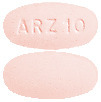
ABYRAZ 10 mg tablets are pink, oblong, biconvex tablets. The tablets are debossed with "ARZ" and "10" on one side. (AUST R 159503).
ABYRAZ 15 mg tablets are yellow, round, biconvex tablets. The tablets are debossed with "ARZ" and "15" on one side.
(AUST R 159506).
ABYRAZ 20 mg tablets are white, round, biconvex tablets. The tablets are debossed with "ARZ" and "20" on one side.
(AUST R 159505).
ABYRAZ 30 mg tablets are pink, round, biconvex tablets. The tablets are debossed with "ARZ" and "30" on one side.
(AUST R 159504).
Who distributes ABYRAZ
Alphapharm Pty Ltd trading as Viatris
Level 1, 30 The Bond
30-34 Hickson Road
Millers Point NSW 2000
www.viatris.com.au
Phone: 1800 274 276
This leaflet was prepared in July 2022.
ABYRAZ® is a Viatris company trade mark
ABYRAZ_cmi\Jul22/00
Published by MIMS September 2022