Boxed Warnings
Serious disabling and potentially irreversible adverse reactions. Fluoroquinolones, including ciprofloxacin, have been associated with disabling and potentially irreversible serious adverse reactions involving different body systems that have occurred together in the same patient. Patients of any age or without pre-existing risk factors have experienced these adverse reactions. These include but are not limited to serious adverse reactions involving the nervous system (see Section 4.4, Effects on the central nervous system), musculoskeletal system (see Section 4.4, Tendonitis and tendon rupture) and psychiatric effects (see Section 4.4, Psychiatric reactions).
1 Name of Medicine
Ciprofloxacin hydrochloride.
2 Qualitative and Quantitative Composition
Each tablet contains 250 mg, 500 mg or 750 mg of ciprofloxacin.
For the full list of excipients see Section 6.1 List of Excipients.
3 Pharmaceutical Form
APO-Ciprofloxacin 250 mg tablets. White to off-white, round, film-coated tablets debossed with "250" on one side and plain on the other.
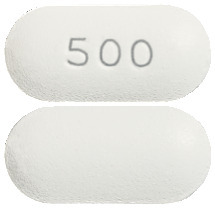
APO-Ciprofloxacin 500 mg tablets. White to off-white, caplet shaped, film-coated tablets debossed with "500" on one side and plain on the other side.
APO-Ciprofloxacin 750 mg tablets. White to off-white, caplet shaped, film-coated tablets debossed with "750" on one side and plain on the other side.
4 Clinical Particulars
4.9 Overdose
Symptoms. In the event of acute, excessive oral overdosage, reversible renal toxicity has been reported in some cases.
Treatment. Apart from routine emergency measures, it is recommended to monitor renal function, including urinary pH and acidify if required to prevent crystalluria. Patients should be kept well hydrated. Calcium or magnesium containing antacids reduce the absorption of ciprofloxacin in overdoses.
Only a small quantity of ciprofloxacin (< 10%) is removed from the body after haemodialysis or peritoneal dialysis.
For information on the management of overdose, contact the Poisons Information Centre on 131126 (Australia).
5 Pharmacological Properties
5.3 Preclinical Safety Data
Genotoxicity. Ciprofloxacin was mutagenic in the mouse lymphoma assay and the rat primary hepatocyte culture/DNA repair assay in vitro, but not in other mammalian systems in vitro or in microbial systems.
In a small study on the chromosomal effects of ciprofloxacin on white blood cells, the drug did not exhibit any cytogenetic effect.
Carcinogenicity. Carcinogenicity studies in mice (oral doses up to 1090 mg/kg/day and 1455 mg/kg/day in males and females, respectively; 1.4 and 1.8 times the highest recommended human dose of 1500 mg/day based upon body surface area) and rats (241 mg/kg/day and 328 mg/kg/day in males and females, respectively; 3.1 and 4.2 times the highest recommended human dose of 1500 mg/day based upon body surface area) showed no evidence of carcinogenicity.
Results from photo co-carcinogenicity testing indicate that ciprofloxacin does not reduce the time to appearance of UV induced skin tumours as compared to vehicle control. Hairless (Skh-1) mice were exposed to UVA light for 3.5 hours five times every two weeks for up to 78 weeks while concurrently being administered ciprofloxacin. The time to development of the first skin tumours was 50 weeks in mice treated concomitantly with UVA and ciprofloxacin (mouse dose approximately equal to maximum recommended human dose based upon mg/m2), as opposed to 34 weeks when animals were treated with both UVA and vehicle. The times to development of skin tumours ranged from 16 to 32 weeks in mice treated concomitantly with UVA and other quinolones. In this model, mice treated with ciprofloxacin alone did not develop skin or systemic tumours. There are no data from similar models using pigmented mice and/or fully haired mice. The clinical significance of these findings to humans is unknown.
6 Pharmaceutical Particulars
6.7 Physicochemical Properties
A pale yellow, crystalline powder, soluble in water, slightly soluble in methanol, very slightly soluble in ethanol, practically insoluble in acetone, in ethyl acetate and in methylene chloride.
Ciprofloxacin hydrochloride is a synthetic carboxyquinolone derivative with broad spectrum antimicrobial activity. It is the monohydrochloride monohydrate salt of 1-cyclopropyl-6-fluoro-1,4-dihydro-4-oxo-7-(1-piperazinyl)-3-quinolinecarboxylic acid.
Chemical structure.
https://stagingapi.mims.com/au/public/v2/images/fullchemgif/CSCIPHYD.gif Chemical Name: 1-cyclopropyl-6-fluoro-4-oxo-7-(piperazin-1-yl)-1,4-dihydro-quinoline-3-carboxylic acid hydrochloride.
Molecular formula: C17H18FN3O3.HCl.H2O.
Molecular weight: 385.8.
CAS number. 86393-32-0.
7 Medicine Schedule (Poisons Standard)
S4 - Prescription Only Medicine.
Summary Table of Changes
https://stagingapi.mims.com/au/public/v2/images/fulltablegif/APOCIPST.gif