1 Name of Medicine
Donepezil hydrochloride.
2 Qualitative and Quantitative Composition
Donepezil hydrochloride is a specific and reversible inhibitor of the enzyme acetylcholinesterase.
Aridon APN tablets come in two strengths and contain either 5 mg or 10 mg of donepezil hydrochloride.
Excipients with known effect. Contains sugars as (lactose).
For the full list of excipients, see Section 6.1 List of Excipients.
3 Pharmaceutical Form
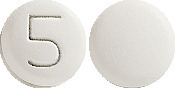
Aridon APN 5 are white to off-white, round, bevelled edge, biconvex, film coated tablets with inscription "5" on one side and plain on other side.
Aridon APN 10 are yellow, round, biconvex, film coated tablets with inscription "10" on one side and plain on other side.
4 Clinical Particulars
4.9 Overdose
Overdosage with cholinesterase inhibitors can result in cholinergic crisis characterised by severe nausea, vomiting, miosis, lacrimation, salivation, sweating, flushing, bradycardia, involuntary urination and/or defecation, bronchospasm, increased bronchial secretions, respiratory depression, collapse and convulsions/seizures. Hypotension following overdose could be severe leading to cardiovascular collapse or shock. Abdominal pain, diarrhoea, increased micturition, diaphoresis, vertigo, fasciculations, tremors, agitation, lethargy, syncope and coma may occur. Various dysrhythmias, primarily heart block, may theoretically occur due to cholinergic effects. Increasing muscle weakness is a possibility and may result in death if respiratory muscles are involved. Due to its high degree of selectivity for AChE in the CNS and less peripheral selectivity, overdoses would be expected to exhibit more CNS-related symptomatology, including extrapyramidal effects.
Overdoses of 45 mg and 50 mg in two elderly patients resulted in minimal effects, predominately gastrointestinal, and in one case persistent bradycardia (HR in the 40's) both with uneventful recoveries.
As in any case of overdose, general supportive measures should be utilised. Cholinesterase activity may be depressed and should be monitored in plasma (pseudocholinesterase) and red blood cells. Monitor ECG following significant exposures. Monitor pulse oximetry and/or arterial blood gases and obtain a chest radiograph in patients with pulmonary symptoms. Tertiary anticholinergics such as atropine may be used as an antidote for donepezil hydrochloride overdosage. Intravenous atropine sulphate titrated to effect is recommended: an initial dose of 1.0 to 2.0 mg IV with subsequent doses based upon clinical response. Atypical responses in blood pressure and heart rate have been reported with other cholinomimetics when co-administered with quaternary anticholinergics such as glycopyrrolate. Consider administration of activated charcoal in the event of a potentially toxic ingestion. Activated charcoal is most effective when administered within one hour of ingestion. In patients who are not fully conscious or have impaired gag reflex, consideration should be given to administering activated charcoal via nasogastric tube once the airway is protected. It is not known whether donepezil and/or its metabolites can be removed by dialysis (haemodialysis, peritoneal dialysis, or haemofiltration). Emesis is not recommended because of the potential for CNS depression and seizures.
For information on the management of overdose, contact the Poisons Information Centre on 13 11 26 (Australia).
5 Pharmacological Properties
It has been demonstrated that Alzheimer's disease is associated with a relative decrease in the activity of the cholinergic system in the cerebral cortex and other areas of the brain. Studies suggest that donepezil hydrochloride exerts its therapeutic effect by enhancing cholinergic function in the central nervous system. This is accomplished by increasing the concentration of acetylcholine through reversible inhibition of acetylcholinesterase.
5.3 Preclinical Safety Data
Genotoxicity. Donepezil was not mutagenic in reverse mutation assays in bacteria or in the mouse lymphoma forward mutation assay in vitro. Donepezil did not induce unscheduled DNA synthesis in rat primary hepatocyte cultures following oral dosing of the animals. In the chromosome aberration test in cultures of Chinese hamster lung cells, some clastogenic effects were observed. Donepezil was not clastogenic in the in vivo mouse micronucleus test.
Carcinogenicity. No evidence of carcinogenicity was found in long-term studies in mice and rats with dietary dosing of donepezil resulting in peak plasma concentrations of up to 17 times and 6-19 times, respectively, that in humans at the recommended clinical dose of 10 mg/day.
6 Pharmaceutical Particulars
6.7 Physicochemical Properties
Donepezil hydrochloride is a white crystalline powder and is freely soluble in chloroform, soluble in water and in glacial acetic acid, slightly soluble in ethanol and in acetonitrile and practically insoluble in ethyl acetate and in n-hexane.
Chemical structure. Chemical name: (RS)-1-benzyl-4- [5,6-dimethoxy-1-indanon)-2-yl] -methylpiperidine hydrochloride.
Structural formula:
https://stagingapi.mims.com/au/public/v2/images/fullchemgif/CSDONEPE.gif Molecular formula: C24H29NO3HCl.
Molecular weight: 415.96.
CAS number. 120011-70-3.
7 Medicine Schedule (Poisons Standard)
S4 - Prescription only medicine.
Summary Table of Changes
https://stagingapi.mims.com/au/public/v2/images/fulltablegif/ARIAPNST.gif