Boxed Warnings
Limitations of use. Because of the risks associated with the use of opioids, Aspalgin should only be used in patients for whom other treatment options, including non-opioid analgesics, are ineffective, not tolerated or otherwise inadequate to provide appropriate management of pain (see Section 4.4 Special Warnings and Precautions for Use).
Hazardous and harmful use. Aspalgin poses risks of hazardous and harmful use which can lead to overdose and death. Assess the patient's risk of hazardous and harmful use before prescribing and monitor the patient regularly during treatment (see Section 4.4 Special Warnings and Precautions for Use).
Life threatening respiratory depression. Serious, life-threatening or fatal respiratory depression may occur with the use of Aspalgin. Be aware of situations which increase the risk of respiratory depression, modify dosing in patients at risk and monitor patients closely, especially on initiation or following a dose increase (see Section 4.4 Special Warnings and Precautions for Use).
Concomitant use of benzodiazepines and other central nervous system (CNS) depressants, including alcohol. Concomitant use of opioids with benzodiazepines, gabapentinoids, antihistamines, tricyclic antidepressants, antipsychotics, cannabis or other central nervous system (CNS) depressants, including alcohol, may result in profound sedation, respiratory depression, coma, and death. Limit dosages and durations to the minimum required; and monitor patients for signs and symptoms of respiratory depression and sedation. Caution patients not to drink alcohol while taking Aspalgin.
1 Name of Medicine
Aspirin and codeine phosphate hemihydrate.
2 Qualitative and Quantitative Composition
Each Aspalgin dispersible tablet contains 300 mg aspirin and 8 mg codeine phosphate hemihydrate as the active ingredients.
Excipients of known effect. Gluten, saccharin.
For the full list of excipients, see Section 6.1 List of Excipients.
3 Pharmaceutical Form
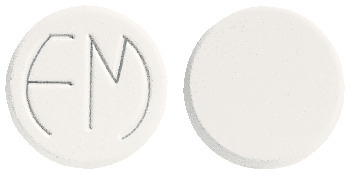
Aspalgin dispersible tablets are round, white and flat with bevelled edges with one side plain and one side engraved FM having a diameter of 17/32".
4 Clinical Particulars
4.9 Overdose
Overdosage with Aspalgin involves treatment of both aspirin and codeine poisoning.
Aspirin. Symptoms. Mild chronic salicylate intoxication usually occurs only after repeated administration of large doses. Symptoms include: dizziness, tinnitus, deafness, sweating, nausea and vomiting, headache and mental confusion, may be controlled by reducing the dose.
Symptoms of more severe intoxication or of acute poisoning following overdosage include: hyperventilation, fever, restlessness, ketosis, and respiratory alkalosis and metabolic acidosis. Depression of the central nervous system may lead to coma, cardiovascular collapse, and respiratory failure. In children, drowsiness and metabolic acidosis commonly occur, hypoglycaemia may be severe.
Treatment. In acute salicylate overdosage, the stomach should be emptied by aspiration. Patients with mild intoxication should be encouraged to increase fluid intake. In patients with more severe intoxication, forced alkaline diuresis may be required. Plasma electrolytes, particularly potassium, and the acid-base balance should be monitored regularly. In the presence of cardiac or renal function impairment or in very severe intoxication, haemodialysis or haemoperfusion may need to be considered.
Codeine. Symptoms. Symptoms of codeine overdosage include vomiting, hypotension, sweating, central stimulation with exhilaration and convulsions in children, drowsiness, respiratory depression, cyanosis and coma.
Treatment. Support respiratory and cardiovascular function. Assisted ventilation may be necessary. Induction of emesis is not recommended because of the potential for CNS depression and seizures. Administer activated charcoal, taking care to protect the airway as necessary. If clinically significant respiratory or cardiac depression is present, give naloxone. The usual adult dose is 0.4 to 2.0 mg intravenously (or subcutaneously), repeated every 2 to 3 minutes if necessary up to 10 mg. The use of naloxone in physically dependent patients may precipitate withdrawal symptoms.
For information on the management of overdose, contact the Poisons Information Centre on 13 11 26 (Australia).
5 Pharmacological Properties
5.3 Preclinical Safety Data
Genotoxicity. No data available.
Carcinogenicity. No data available.
6 Pharmaceutical Particulars
6.7 Physicochemical Properties
Chemical structure. Aspirin. Aspirin exists as colourless or white crystals or white crystalline powder. It is odourless or almost odourless. It is slightly soluble in water, freely soluble in alcohol, soluble in chloroform and ether.
https://stagingapi.mims.com/au/public/v2/images/fullchemgif/CSASPIRI.gif Chemical name: salicylic acid acetate.
Molecular formula: C9H8O4.
Molecular weight: 180.2.
Codeine phosphate hemihydrate. Codeine phosphate hemihydrate is a small, colourless, odourless crystal or a white, odourless crystalline powder. Codeine phosphate is soluble in 4 parts of water, slightly soluble in ethanol (96%), practically insoluble in chloroform and ether.
https://stagingapi.mims.com/au/public/v2/images/fullchemgif/CSCOPHHH.gif Chemical name: (5R,6S)-7,8-didehydro-4,5-epoxy-3-methoxy-N-methylmorphinan-6-ol dihydrogen orthophosphate hemihydrate.
Molecular formula: C18H21NO3.H3PO4.1/2H2O.
Molecular weight: 406.4.
CAS number. Aspirin: 50-78-2.
Codeine phosphate hemihydrate: 41444-62-6.
7 Medicine Schedule (Poisons Standard)
S4 (Prescription Only Medicine).
Summary Table of Changes
https://stagingapi.mims.com/au/public/v2/images/fulltablegif/ASPALGST.gif