1 Name of Medicine
Escitalopram oxalate.
2 Qualitative and Quantitative Composition
Blooms Escitalopram 10 mg tablets. Film-coated tablets containing 10 mg escitalopram (as oxalate).
Blooms Escitalopram 20 mg tablets. Film-coated tablets containing 20 mg escitalopram (as oxalate).
For the full list of excipients, see Section 6.1 List of Excipients.
3 Pharmaceutical Form
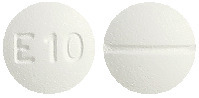
Blooms Escitalopram 10 mg tablets are white, round, biconvex film-coated tablets, with 'E10' debossed on one side and break line on the other side.
Blooms Escitalopram 20 mg tablets are white, round, biconvex film-coated tablets, with 'E20' debossed on one side and break line on the other side.
Escitalopram is the active enantiomer (S-enantiomer) of citalopram. Escitalopram oxalate is a fine white to yellow, crystalline material.
Escitalopram oxalate is sparingly soluble in water, slightly soluble in acetone, soluble in ethanol and freely soluble in methanol. No polymorphic forms have been detected.
4 Clinical Particulars
4.9 Overdose
In general, the main therapy for all overdoses is supportive and symptomatic care.
Toxicity. Clinical data on escitalopram overdose are limited and many cases involve concomitant overdoses of other drugs. In the majority of cases, mild or no symptoms have been reported. Fatal cases of escitalopram overdose have rarely been reported with escitalopram alone; the majority of cases have involved overdose with concomitant medications. Doses between 400 and 800 mg of escitalopram alone have been taken without any severe symptoms.
Symptoms. Symptoms seen in reported overdose of escitalopram include symptoms mainly related to the central nervous system (ranging from dizziness, tremor and agitation to rare cases of serotonin syndrome, convulsion and coma), the gastrointestinal system (nausea/vomiting), the cardiovascular system (hypotension, tachycardia, arrhythmia and ECG changes (including QT prolongation), and electrolyte/fluid balance conditions.
Treatment. There is no specific antidote. Establish and maintain an airway, ensure adequate oxygenation and respiratory function. The use of activated charcoal should be considered. Activated charcoal may reduce absorption of the drug if given within one or two hours after ingestion. In patients who are not fully conscious or have impaired gag reflex, consideration should be given to administering activated charcoal via a nasogastric tube, once the airway is protected. Cardiac and vital signs monitoring are recommended along with general symptomatic supportive measures.
For information on the management of overdose, please contact the Poisons Information Centre 13 11 26 (Australia).
5 Pharmacological Properties
5.3 Preclinical Safety Data
High doses of escitalopram, which resulted in plasma Cmax for escitalopram and metabolites at least 8-fold greater than anticipated clinically, have been associated with convulsions, ECG abnormalities and cardiovascular changes in experimental animals. Of the cardiovascular changes, cardiotoxicity (including congestive heart failure) was observed in comparative toxicological studies in rats following oral escitalopram or citalopram administration for 4 to 13 weeks and appears to correlate with peak plasma concentrations although its exact mechanism is not clear. Clinical experiences with citalopram, and the clinical trial experience with escitalopram, do not indicate that these findings have a clinical correlate.
Genotoxicity. No genotoxicity studies were performed with escitalopram. However, other nonclinical studies suggest that the effects of escitalopram can be directly predicted from those of the citalopram racemate.
Carcinogenicity. No carcinogenicity studies were performed with escitalopram. However, other nonclinical studies suggest that the effects of escitalopram can be directly predicted from those of the citalopram racemate.
Citalopram did not show any carcinogenic activity in long-term oral studies using mice and rats at doses up to 240 and 80 mg/kg/day, respectively.
In assays of genotoxic activity, citalopram showed no evidence of mutagenic or clastogenic activity.
6 Pharmaceutical Particulars
6.7 Physicochemical Properties
Escitalopram oxalate.
Chemical name: S(+)-1-(3-dimethylaminopropyl)-1-(4-fluorophenyl)-1,3-dihydroisobenzofuran-5-carbonitrile hydrogen oxalate.
Molecular formula: C20H21FN2O.C2H2O4.
Molecular weight: 414.42.
Chemical structure.
https://stagingapi.mims.com/au/public/v2/images/fullchemgif/CSESCITA.gif CAS number. 219861-08-2.
7 Medicine Schedule (Poisons Standard)
Schedule 4 (S4) - Prescription only medicine.
Summary Table of Changes
https://stagingapi.mims.com/au/public/v2/images/fulltablegif/BLMESCST.gif