

Consumer medicine information

Ceclor CD 375 mg Modified release tablets

Cefaclor

BRAND INFORMATION

Brand name

Ceclor CD

Active ingredient

Cefaclor

Schedule

S4


Consumer medicine information (CMI) leaflet

Please read this leaflet carefully before you start using Ceclor CD 375 mg Modified release tablets.

1. Why am I using CECLOR CD?


CECLOR CD contains the active ingredient cefaclor. CECLOR CD is used to treat infections caused by bacteria in different parts of the body. For more information, see Section 1. Why am I using CECLOR CD? in the full CMI.

2. What should I know before I use CECLOR CD?


Do not use if you have ever had an allergic reaction to CECLOR CD or any of the ingredients listed at the end of the CMI.
Talk to your doctor if you have any other medical conditions, take any other medicines, or are pregnant or plan to become pregnant or are breastfeeding.
For more information, see Section 2. What should I know before I use CECLOR CD? in the full CMI.

3. What if I am taking other medicines?


Some medicines may interfere with CECLOR CD and affect how it works.
A list of these medicines is in Section 3. What if I am taking other medicines? in the full CMI.

4. How do I use CECLOR CD?

  • Your doctor will tell you how much CECLOR CD you need to take.
  • Take CECLOR CD at about the same time each day with food.

More instructions can be found in Section 4. How do I use CECLOR CD? in the full CMI.

5. What should I know while using CECLOR CD?

Things you should do
  • Remind any doctor, dentist or pharmacist you visit that you are using CECLOR CD.
  • Tell your doctor if the symptoms of your infection do not improve within a few days, or if they become worse.
  • If you become pregnant while taking this medicine, tell your doctor immediately.
Things you should not do
  • Do not take CECLOR CD to treat any other complaints unless your doctor tells you to.
  • Do not give your medicine to anyone else, even if they have the same condition as you.
  • Do not stop taking your medicine or lower the dosage without checking with your doctor.
Driving or using machines
  • Be careful driving or operating machinery until you know how CECLOR CD affects you.
Looking after your medicine
  • Keep the pack in a cool, dry place (below 25°C) in its original packaging.
  • Do not store CECLOR CD in the bathroom, near a sink, on a window sill or in the car.
  • Keep your tablets where children cannot reach it.

For more information, see Section 5. What should I know while using CECLOR CD? in the full CMI.

6. Are there any side effects?


Tell your doctor or pharmacist if you notice any of the following and they worry you: diarrhoea; itchy rash; oral thrush - white, furry, sore tongue or mouth; vaginal thrush - sore and itchy vagina and/or abnormal discharge. Tell your doctor as soon as possible if you notice any of the following: nausea; vomiting; drowsiness; headache; hyperactivity, nervousness, insomnia, confusion, dizziness, hallucinations; severe muscle stiffness; swelling of the joints with or without fever; pain in the joints with or without fever; itching or swelling of the skin; yellowing of the skin or eyes; frequent infections such as fever, severe chills, sore throat or mouth ulcers; bleeding or bruising more easily than normal; difficulty in swallowing or breathing.
This is not a complete list of all possible side effects. For more information, including what to do if you have any side effects, see Section 6. Are there any side effects? in the full CMI.

BRAND INFORMATION

Brand name

Ceclor CD

Active ingredient

Cefaclor

Schedule

S4


1 Name of Medicine

Cefaclor (as monohydrate).

2 Qualitative and Quantitative Composition

Each Ceclor CD modified release tablet contains 375 mg of cefaclor (as monohydrate) as the active ingredient.
For the full list of excipients, see Section 6.1 List of Excipients.

3 Pharmaceutical Form

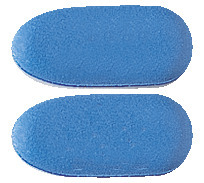
Ceclor CD modified release tablets are blue capsule-shaped tablets with no engraving.

4 Clinical Particulars

4.9 Overdose

Signs and symptoms. The toxic symptoms following an overdose of Ceclor CD may include nausea, vomiting, epigastric distress and diarrhoea. The severity of the epigastric distress and the diarrhoea are dose related. If other symptoms are present, it is probable that they are secondary to an underlying disease state, an allergic reaction, or the effects of other intoxication.
Treatment. In managing overdosage, consider the possibility of multiple drug overdoses, interaction among drugs and unusual drug kinetics in your patient.
Protect the patient's airway and support ventilation and perfusion. Meticulously monitor and maintain, within acceptable limits, the patient's vital signs, blood gases, serum electrolytes, etc. Absorption of drugs from the gastrointestinal tract may be decreased by giving activated charcoal. Repeated doses of charcoal over time may hasten elimination of some drugs that have been absorbed. Safeguard the patient's airway when employing charcoal.
Forced diuresis, peritoneal dialysis, haemodialysis or charcoal haemoperfusion have not been established as beneficial for an overdose of cefaclor.
For information on the management of overdose, contact the Poisons Information Centre on 13 11 26 (Australia).

5 Pharmacological Properties

5.3 Preclinical Safety Data

Genotoxicity. Studies in animals have not been performed to evaluate the mutagenic potential for Ceclor CD.
Carcinogenicity. Studies in animals have not been performed to evaluate the carcinogenic potential for Ceclor CD.

6 Pharmaceutical Particulars

6.7 Physicochemical Properties

Chemical structure.
https://stagingapi.mims.com/au/public/v2/images/fullchemgif/CSCEFMON.gif Chemical name: 3-chloro-7-D-(2-phenyl-glycinamido)-3-cephem-4-carboxylic acid monohydrate.
Molecular formula: C15H16ClN3O5S.
Molecular weight: 385.8.
Ceclor CD (cefaclor modified release) is a pharmaceutically-modified form of the orally active cephalosporin, cefaclor monohydrate. It is a semisynthetic cephalosporin antibiotic for oral administration. Ceclor CD differs from other available products containing cefaclor in its rate of dissolution, producing a lower peak serum concentration, but retaining sustained measurable serum concentrations, which provides the advantage of twice daily dosing.
CAS number. 70356-03-5.

7 Medicine Schedule (Poisons Standard)

S4 (Prescription Only Medicine).

Summary Table of Changes

https://stagingapi.mims.com/au/public/v2/images/fulltablegif/CECLCDST.gif