1 Name of Medicine
Colchicine.
2 Qualitative and Quantitative Composition
Each tablet contains 500 microgram of the active colchicine.
List of excipients with known effects. Lactose monohydrate.
For the full list of excipients, see Section 6.1 List of Excipients.
3 Pharmaceutical Form
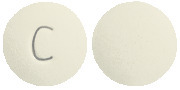
Round, white, slightly biconvex tablets embossed "C" on the upper side, and plain on the bottom face.
4 Clinical Particulars
4.9 Overdose
Symptoms. A latent period of 2 to 12 hours occurs between overdose and the onset of gastrointestinal symptoms.
The first signs of toxicity may be a feeling of burning and rawness in the mouth and throat and difficulty in swallowing. These symptoms are followed by severe nausea, vomiting, abdominal pain, haemorrhagic gastroenteritis, with resulting electrolyte abnormalities, volume depletion and hypotension.
The second phase consists of multisystem failure and generally occurs at 24 to 72 hours post ingestion. Effects include CNS toxicity, bone marrow depression, hepatocellular damage, muscle damage, respiratory distress, myocardial injury and renal damage. Multiple organ failure caused by tissue damage including bone marrow hypoplasia is likely to be followed by agranulocytosis, leukopenia, thrombocytopenia and disseminated intravascular coagulation. In some patients, disseminated intravascular coagulation may be the first haematological sign of toxicity, with the most severe coagulopathy occurring about 25 hours following the administration of a large overdose. Leucopenia may persist for several days followed by leucocytosis with numerous metamyelocytes and myelocytes. Other haematological manifestations of colchicine poisoning include granulocytopenia, immature leukocytes, pancytopenia, anaemia with anisocytosis, polychromasia and basophilic stippling.
Cerebral oedema and CNS toxicity are also associated with acute colchicine toxicity and may be characterised by marked muscular weakness and the development of ascending CNS paralysis with the patient remaining conscious. Mental confusion, delirium, seizures and convulsions may occur as a result of CNS toxicity. There may be a loss of deep tendon and Achilles tendon reflexes, and Babinski's reflex may be elicited.
A fever may develop; sepsis is a well recognised complication and should not be ruled out.
Death may occur as a result of respiratory depression, cardiovascular collapse, or sepsis.
In surviving patients, alopecia, rebound leucocytosis and stomatitis may occur about 10 days after the acute overdose.
Severe toxicity and death have been associated with oral doses exceeding 0.5 mg/kg. The lethal dose varies. While it appears to be about 40 mg in adults with normal renal function, a fatal dose of 7 mg has been recorded.
Treatment. When treating colchicine overdosage or acute poisoning, patients should be carefully monitored for at least 12 hours to take into account the delayed onset of symptoms.
There is no specific antidote for colchicine poisoning. Activated charcoal should be administered, preferably within one hour of ingestion. Repeated oral charcoal dosing (every 2 to 6 hours), administered as a slurry, may enhance total body clearance and elimination, but has not been shown to affect outcome and is not routinely recommended. Consider administration of more than one dose of activated charcoal in patients with moderate to severe poisoning or very large ingestions, and those with clinical deterioration or rising levels despite initial decontamination.
Measures to prevent shock should be taken and diarrhoea should not be treated as this is the main route of elimination.
Other treatment is symptomatic and supportive with attention being given to the control of respiration, maintenance of blood pressure and the circulation, and correction of fluid and electrolyte imbalance.
Analgesics with or without atropine may relieve the abdominal pain, but monitor carefully for possible paralytic ileus.
A benzodiazepine such as diazepam may be given to control convulsions.
Both acute and chronic toxicity may lead to bone marrow depression. Isolate patient if there is evidence of bone marrow depression.
Due to the large apparent volume of distribution of colchicine, haemodialysis and peritoneal dialysis are not recommended.
Monitoring should include haemodynamic, cardiac and respiratory status and blood electrolytes. In some circumstances, prolonged observation may be recommended as the most severe toxic effects may not appear until 24 hours after ingestion of an acute dose.
For information on the management of overdose, contact the Poisons Information Centre on 13 11 26 (Australia).
5 Pharmacological Properties
5.3 Preclinical Safety Data
Genotoxicity. Mutagenicity studies of colchicine have not been evaluated. Colchicine is a known genotoxin, causing gene mutations, DNA damage and chromosomal damage in several in vitro and in vivo assays.
Carcinogenicity. Animal studies have not been performed to assess the potential carcinogenic effect of colchicine. Since colchicine is an established mutagen, its ability to act as a carcinogen must be suspected and treatment with Colgout should involve a weighing of the benefit vs risk when long-term administration is being considered.
6 Pharmaceutical Particulars
6.7 Physicochemical Properties
Colchicine occurs as pale yellow, amorphous scales or powder and darkens on exposure to light. Colchicine is soluble in water, freely soluble in alcohol and chloroform and slightly soluble in ether.
A phenanthrene derivative, colchicine is an alkaloid obtained from various species of Colchicum. The chemical name for colchicine is (S)-N-(5,6,7,9-tetrahydro-1,2,3,10- tetramethoxy-9-oxobenzo [α] heptalen-7-yl) acetamide (molecular weight 399.4).
Chemical structure.
https://stagingapi.mims.com/au/public/v2/images/fullchemgif/CSCOLCHI.gif CAS number. 64-86-8.
7 Medicine Schedule (Poisons Standard)
S4.
Summary Table of Changes
https://stagingapi.mims.com/au/public/v2/images/fulltablegif/COLGOUST.gif