

Consumer medicine information

Esopreze 20 mg Tablets

Esomeprazole

BRAND INFORMATION

Brand name

Esopreze

Active ingredient

Esomeprazole

Schedule

S4


Consumer medicine information (CMI) leaflet

Please read this leaflet carefully before you start using Esopreze 20 mg Tablets.

1. Why am I taking ESOPREZE?


ESOPREZE contains the active ingredient esomeprazole magnesium trihydrate. ESOPREZE is used to treat reflux conditions and ulcers. ESOPREZE is also taken to help stop reflux coming back or relapsing.
For more information, see Section 1. Why am I taking ESOPREZE? in the full CMI.

2. What should I know before I take ESOPREZE?


Do not take ESOPREZE if you have ever had an allergic reaction to esomeprazole or any of the ingredients listed at the end of the CMI. Do not use if you have allergies to any medicines containing a proton pump inhibitor.
Talk to your doctor if you have any other medical conditions, take any other medicines, or are pregnant or plan to become pregnant or are breastfeeding.
For more information, see Section 2. What should I know before I take ESOPREZE? in the full CMI.

3. What if I am taking other medicines?


Some medicines may interfere with ESOPREZE and affect how it works.
A list of these medicines is in Section 3. What if I am taking other medicines? in the full CMI.

4. How do I take ESOPREZE?

  • Take one ESOPREZE tablet each day, unless your doctor has told you otherwise.
  • Swallow ESOPREZE tablets whole with a glass of water. Do not crush or chew the tablets. If the tablets are chewed or crushed they will not work properly.

More instructions can be found in Section 4. How do I take ESOPREZE? in the full CMI.

5. What should I know while taking ESOPREZE?

Things you should do
  • Remind any doctor, dentist, or pharmacist you visit that you are taking ESOPREZE.
  • Tell your doctor or pharmacist as soon as possible if you do not feel well while you are taking ESOPREZE.
Things you should not do
  • Do not take it to treat any other complaints unless your doctor tells you to.
  • Do not give this medicine to anyone else, even if their symptoms seem similar to yours.
Driving or using machines
  • ESOPREZE is unlikely to affect your ability to drive or to operate machinery.
Food and Drink
  • ESOPREZE can be taken with food or on an empty stomach.
Looking after your medicine
  • Keep it in a cool, dry place where the temperature stays below 25°C.
  • Keep your ESOPREZE tablets in the blister pack until it is time to take it.

For more information, see Section 5. What should I know while taking ESOPREZE? in the full CMI.

6. Are there any side effects?


All medicines can have side effects. If they do occur, they are usually minor and temporary. Do not be alarmed by this list.
You may not experience any of them. The most common side effects are stomach complaints and headache. The more serious and uncommon or rare side effects are blurred vision, mood changes, confusion or depression, muscle pain or weakness, joint pain, increase in breast size (males), increased sweating, changes in sleep patterns, fever, increased bruising, pins and needles, hair loss, tremor, blood in the urine, increased or decreased urine output, skin reaction, especially in sun-exposed areas, with joint pain, swelling of body parts, difficulty breathing, skin reactions or signs of liver inflammation.
For more information, including what to do if you have any side effects, see Section 6. Are there any side effects? in the full CMI.

BRAND INFORMATION

Brand name

Esopreze

Active ingredient

Esomeprazole

Schedule

S4


1 Name of Medicine

Esomeprazole magnesium trihydrate.

2 Qualitative and Quantitative Composition

The active ingredient in Esopreze is esomeprazole magnesium trihydrate, a substituted benzimidazole.
The Esopreze 20 mg and 40 mg tablets are comprised of enteric coated pellets containing esomeprazole (as magnesium trihydrate). Contains sugars.
For the full list of excipients, see Section 6.1 List of Excipients.

3 Pharmaceutical Form

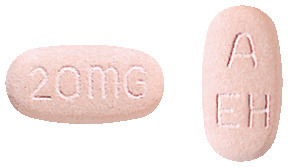
Esopreze 20 mg tablets are a light pink, oblong, biconvex, film-coated tablet engraved 20 mg on one side and A/EH on the other side. Each tablet contains esomeprazole magnesium trihydrate 22.3 mg as enteric-coated pellets.
Esopreze 40 mg tablets are a pink, oblong, biconvex, film-coated tablet engraved 40 mg on one side and A/EI on the other side. Each tablet contains esomeprazole magnesium trihydrate 44.5 mg as enteric-coated pellets.

4 Clinical Particulars

4.9 Overdose

The symptoms described in connection with deliberate esomeprazole overdose are transient. The symptoms described in connection with 280 mg were gastrointestinal symptoms and weakness. Single doses of 80 mg esomeprazole were uneventful. No specific antidote is known. Esomeprazole is extensively protein bound and is therefore not readily dialyzable. As in any case of overdose, treatment should be symptomatic and general supportive measures should be utilised.
For information on the management of overdose, contact the Poisons Information Centre on 13 11 26 (Australia).

5 Pharmacological Properties

5.3 Preclinical Safety Data

Genotoxicity. Esomeprazole was negative in a bacterial gene mutation assay. In clastogenicity tests, esomeprazole was positive (as was omeprazole) in an in vitro chromosome aberration test in human lymphocytes. However, two in vivo tests (a mouse micronucleus test and an in vivo chromosome aberration test in rat bone marrow) in the presence of long and high systemic exposure to esomeprazole, showed that esomeprazole was not clastogenic under in vivo conditions. Exposure levels in man are well below those at which clastogenic effects occurred in vitro.
Carcinogenicity. Preclinical bridging studies between the enantiomer esomeprazole and the racemate (omeprazole) showed that these compounds are pharmacologically and toxicologically similar at equivalent systemic exposure. Thus, the extensive preclinical database for omeprazole is also relevant for the safety assessment of esomeprazole.
No carcinogenicity studies have been conducted on esomeprazole. However, omeprazole (the racemate) produced enterochromaffin-like (ECL) cell hyperplasia and gastric carcinoids in rats. In a 104-week study in rats, carcinoids were observed at doses (on a mg/m2 basis) which ranged from 0.4 to 30-fold the maximum clinical dose for adults. However, a no-effect dose level was not determined in female rats. A similar effect was not observed in a 78-week mouse carcinogenicity study with omeprazole. These gastric effects in the rat are believed to be the result of sustained, pronounced hypergastrinaemia secondary to reduced production of 1gastric acid. Similar effects are elicited by other proton pump inhibitors, H2-receptor antagonists and by partial fundectomy.

6 Pharmaceutical Particulars

6.7 Physicochemical Properties

Chemical structure. The chemical name is di-(S)-5-methoxy-2-[[(4-methoxy-3,5-dimethyl-2-pyridinyl)methyl]sulfinyl]-1H-benzimidazole magnesium salt trihydrate. Esomeprazole is the S-isomer of omeprazole. It is optically stable in vivo, with negligible conversion to the R-isomer.
The chemical structure of esomeprazole magnesium trihydrate is:
https://stagingapi.mims.com/au/public/v2/images/fullchemgif/CSESOMEP.gif CAS number. 217087-09-7.
Molecular formula. C34H36N6O6S2Mg.3H2O.
Molecular weight. 767.2 (trihydrate).

7 Medicine Schedule (Poisons Standard)

Schedule 4 - Prescription Only Medicine.

Summary Table of Changes

https://stagingapi.mims.com/au/public/v2/images/fulltablegif/ESOPREST.gif