



What is in this leaflet
This leaflet answers some common questions about Finapen. It does not contain all the available information.
It does not take the place of talking to your doctor or pharmacist.
All medicines have risks and benefits. Your doctor has weighed the risks of you taking Finapen against the benefits they expect it will have for you.
If you have any concerns about taking this medicine, ask your doctor or pharmacist.
Keep this leaflet with the medicine.
You may need to read it again.
What Finapen is used for
Finapen is for use by men only.
Finapen is used to treat men with male pattern hair loss to increase hair growth on the scalp and to prevent further hair loss.
Male pattern hair loss (also known as androgenetic alopecia) is a common condition in which men experience thinning of the hair on the scalp.
This often results in a receding hair line and/or balding on the top of the head. These changes typically start to occur in some men in their 20s and become more common with age.
Once hair loss has occurred over a long period of time, the hair may be permanently lost.
Male pattern hair loss is thought to be caused by a combination of family history (heredity) and production of a particular male hormone, called dihydrotestosterone (DHT). Men with male pattern hair loss have more DHT in the balding part of their scalp than in other parts, resulting in increased hair loss.
How Finapen works
Finapen specifically lowers the levels of DHT in the scalp, thus helping to reverse the balding process.
Finapen does not affect hair on other parts of the body.
Men with mild to moderate, but not complete, hair loss can expect to benefit from the use of Finapen.
In women who were studied, Finapen was not effective in the treatment of hair loss (androgenetic alopecia).
There should be no need to change your usual hair care routine (for example, shampooing or haircuts) because you are taking Finapen.
Finapen is not addictive.
Before you take Finapen
When you must not take it
Do not take Finapen if:
- You have an allergy to Finapen or any of the ingredients listed at the end of this leaflet.
Symptoms of an allergic reaction to Finapen may include skin rash, or swelling of the lips or face.
- The packaging is torn or shows signs of tampering
- The expiry date on the pack has passed.
If you take this medicine after the expiry date has passed, it may not work.
If you are not sure whether you should start taking Finapen, talk to your doctor.
Women who are pregnant or may be pregnant must not take Finapen, handle crushed or broken tablets or handle tablets with wet hands.
If the active ingredient in Finapen is absorbed after swallowing the tablet or through the skin by a woman who is pregnant with a male baby, it may cause the male baby to be born with abnormalities of the sex organs.
Whole tablets are coated to prevent contact with the active ingredient during normal handling, provided that the tablets haven't been crushed or broken.
If a pregnant woman swallows Finapen, handles crushed or broken tablets or handles tablets with wet hands, her doctor must be consulted immediately.
Do not give Finapen to children or women.
Finapen is for use by men only.
Before you start to take it
Tell your doctor if:
- You have or have had any medical conditions
- You have any allergies to any other medicines or any other substances, such as foods, preservatives or dyes.
If you have not told your doctor about any of the above, tell them before you take any Finapen.
Taking other medicines
Tell your doctor if you are taking any other medicines, including medicines that you buy without a prescription from your pharmacy, supermarket or health food shop.
Some medicines may affect the way other medicines work. However, Finapen has not been shown to interfere with other medicines.
How to take Finapen
How much to take
Take Finapen only when prescribed by your doctor.
The dose is one tablet taken once each day. Finapen will not work faster or better if you take it more than once a day.
Swallow Finapen with a glass of water.
It does not matter if you take Finapen before or after food.
Follow all directions given to you by your doctor carefully.
They may differ from the information contained in this leaflet.
If you do not understand the instructions on the box, ask your doctor or pharmacist for help.
If you forget to take it
If it is almost time for your next dose, skip the dose you missed and take your next dose when you are meant to.
If it is not nearly time for your next dose, take it as soon as you remember, and then go back to taking your tablet as you would normally.
If you are not sure whether to skip the dose, talk to your doctor or pharmacist.
Do not take a double dose to make up for the dose that you missed.
If you have trouble remembering to take your tablets, ask your pharmacist for some hints.
How long to take it
Male pattern hair loss is a condition that develops over a long period of time. Because it takes time for new hair to grow, you will not see immediate results. In general, daily use for 3 months or more may be necessary before you notice increased hair growth or prevention of further loss. Continue taking Finapen for as long as your doctor prescribes.
If you stop taking it
If you stop taking the tablets your hair loss is likely to resume.
If you take too much (overdose)
Immediately telephone your doctor or Poisons Information Centre (telephone 13 11 26) for advice, if you think that you or anyone else may have taken too much Finapen. Do this even if there are no signs of discomfort or poisoning.
While you are using Finapen
Things you must do
If you are about to be started on any new medicine tell your doctor and pharmacist that you are taking Finapen.
Things you must not do
Do not give Finapen to anyone else, even if they have the same condition as you.
Side Effects
Tell your doctor or pharmacist as soon as possible if you do not feel well while you are taking Finapen.
Finapen helps most men with male pattern hair loss, but it may have unwanted side effects in a few men. All medicines can have side effects. Sometimes they are serious, most of the time they are not. You may need medical treatment if you get some of the side effects.
Ask your doctor or pharmacist to answer any questions you may have.
Tell your doctor if you notice any of the following and they worry you:
- Difficulty in achieving an erection
- Less desire for sex
- Decreased amount of semen released during sex (this decrease does not appear to interfere with normal sexual function)
Each of these side effects occurred in less than two men in one hundred. It is important to understand that, in clinical trials, these unwanted effects disappeared in men who stopped taking Finapen, as well as in many men who continued treatment.
Also, tell your doctor if you notice problems with ejaculation and it worries you.
Tell your doctor immediately if you notice any of the following:
- Breast swelling and/or tenderness
In rare cases, male breast cancer has been reported.
- breast lumps, pain or discharge from the nipples.
- Skin rash, itchiness
- Hives or nettlerash (pinkish, itchy swellings on the skin)
- Testicle pain
- blood in semen
- depressions (feelings of severe sadness and unworthiness) including suicidal thoughts
These are uncommon side effects that have been reported with Finapen.
Tell your doctor immediately or go to accident and emergency at your nearest hospital if the following happens:
- swelling of the lips or face
These may be symptoms of a serious allergic reaction to Finapen, which may cause difficulty in swallowing or breathing. You may need urgent medical attention. Serious side effects are rare.
Other side effects not listed above may occur in some men. Tell your doctor or pharmacist if you notice any other unwanted effects.
After using Finapen
Storage
Keep your tablets in the blister pack until it is time to take them.
If you take the tablets out of the blister pack they may not keep well.
Never put the tablets in another box or container, as they might get mixed up.
Store Finapen where the temperature stays below 25 degrees C. Do not store it or any other medicine in the bathroom or near a sink.
Do not leave it in the car or on window sills.
Heat and dampness can destroy some medicines.
Keep it where children cannot reach it.
A locked cupboard at least 1½ metres above the ground is a good place to store medicines.
Disposal
If your doctor tells you to stop taking the tablets, or the tablets have passed their expiry date, ask your pharmacist what to do with any that are left over.
Product description
What it looks like
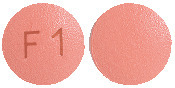
Finapen comes as a reddish brown, round, biconvex, film coated tablet, marked ‘F1’ on one side and plain on the other.
A pack contains 28 tablets.
Ingredients
Active ingredient:
- Finasteride 1 mg per tablet
Inactive ingredients:
- Lactose monohydrate
- Cellulose microcrystalline
- Pregelatinised maize starch
- Lauroyl macrogolglycerides
- Sodium starch glycollate type A
- Magnesium stearate
- Opadry 03F34739 Pink
Finapen does not contain gluten, sucrose, tartrazine or any other azo dyes.
Sponsor
Arrotex Pharmaceuticals Pty Ltd
15-17 Chapel Street
Cremorne
VIC 3121
This leaflet was revised in January 2024.