

Consumer medicine information

Hydroxychloroquine GH 200 mg Tablets

Hydroxychloroquine sulfate

BRAND INFORMATION

Brand name

Hydroxychloroquine GH

Active ingredient

Hydroxychloroquine sulfate

Schedule

S4


Consumer medicine information (CMI) leaflet

Please read this leaflet carefully before you start using Hydroxychloroquine GH 200 mg Tablets.

1. Why am I using Hydroxychloroquine GH?


Hydroxychloroquine GH contains the active ingredient hydroxychloroquine sulfate. Hydroxychloroquine GH is used to treat rheumatoid arthritis and may slow down the process of joint damage and relieve the symptoms of the disease. For more information, see Section 1. Why am I using Hydroxychloroquine GH? in the full CMI.

2. What should I know before I use Hydroxychloroquine GH?


Do not use if you have ever had an allergic reaction to hydroxychloroquine, chloroquine or related products or any of the ingredients listed at the end of the CMI. Talk to your doctor if you have any other medical conditions, take any other medicines, or are pregnant or plan to become pregnant or are breastfeeding. For more information, see Section 2. What should I know before I use Hydroxychloroquine GH? in the full CMI.

3. What if I am taking other medicines?


Some medicines may interfere with Hydroxychloroquine GH and affect how it works. A list of these medicines is in Section 3. What if I am taking other medicines? in the full CMI.

4. How do I use Hydroxychloroquine GH?

  • Swallow tablets whole with a little water or other liquid at meal times. The dosage will depend on why you are being treated with Hydroxychloroquine GH. More instructions can be found in Section 4. How do I use Hydroxychloroquine GH? in the full CMI.

5. What should I know while using Hydroxychloroquine GH?

Things you should do
  • Remind any doctor, dentist or pharmacist you visit that you are using Hydroxychloroquine GH.
Things you should not do
  • Hydroxychloroquine GH should not be used in children under 6 years.
  • Hydroxychloroquine GH should not be used in children over 6 years for long periods.
Driving or using machines
  • Hydroxychloroquine GH may cause problems with the eyesight of some people. Make sure you know how you react to Hydroxychloroquine GH before you drive a car, operate machinery, or do anything else that could be dangerous with blurred vision.
Looking after your medicine
  • Keep your tablets in the bottle until it is time to take them.
  • If you take the tablets out of the bottle they will not keep well.
  • Keep it in a cool dry place where the temperature stays below 25°C.

For more information, see Section 5. What should I know while using Hydroxychloroquine GH? in the full CMI.

6. Are there any side effects?


Speak to your doctor if you have any of these less serious side effects and they worry you: nausea, vomiting, diarrhoea, abdominal cramps, loss of appetite, muscle weakness, dizziness, ringing in the ears, headache, nervousness, skin rash and itching, hair loss. Call your doctor straight away or go to the Emergency Department at your nearest hospital if you have any of these serious side effects: visual disturbances, hearing loss, suicidal behavior, frequent fevers, severe chills, bruising, sore throat or mouth ulcers (these may be signs of blood reactions), changes in the way your heart beats. Having thoughts of self-harm or suicide, feeling depressed, feeling nervous or anxious, feeling confused, agitated, difficulty sleeping, delusions, hallucinations, changes in mood, feeling elated or overexcited. liver problems that may cause the eyes or skin to go yellow (jaundice). More severe symptoms of hypoglycaemia including disorientation, seizures, fits or convulsions and loss of consciousness. Rash with a fever and flulike symptoms and enlarged lymph nodes. Blistering, scaly skin, pus-filled spots with fever. Blistering or peeling of the skin around the lips, eyes, mouth, nose, genitals hands or feet with flu-like symptoms and fever. Skin lesions, skin itching, joint aches, fever and a general ill feeling. Reddish-purple coloured painful sores with or without a fever. For more information, including what to do if you have any side effects, see Section 6. Are there any side effects? in the full CMI.

BRAND INFORMATION

Brand name

Hydroxychloroquine GH

Active ingredient

Hydroxychloroquine sulfate

Schedule

S4


1 Name of Medicine

Hydroxychloroquine sulfate.

2 Qualitative and Quantitative Composition

Each tablet contains 200 mg hydroxychloroquine sulfate, which is equivalent to 155 mg base.
For the full list of excipients, see Section 6.1 List of Excipients.

3 Pharmaceutical Form

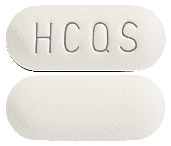
Hydroxychloroquine GH 200 mg tablets. White to off-white, capsule-shaped tablets, embossed "HCQS" on one side, plain on the other side.

4 Clinical Particulars

4.9 Overdose

Symptoms. Overdosage with the 4-aminoquinolines is dangerous. Children are particularly sensitive to these compounds and a number of fatalities have been reported following the accidental ingestion of chloroquine, sometimes in relatively small doses (0.75 gram or 1 gram in one 3 year old child).
The 4-aminoquinolines are very rapidly and completely absorbed after ingestion and toxic symptoms following overdosage may occur within 30 minutes. Toxic symptoms consist of headache, drowsiness, visual disturbances, hypokalaemia, cardiovascular collapse and convulsions.
The ECG may reveal rhythm and conduction disorders including, QT prolongation, torsade de pointe, ventricular tachycardia, ventricular fibrillation width-increased QRS complex, bradyarrhythmias (including bradycardia), nodal rhythm, atrioventricular block, followed by sudden potentially fatal respiratory and cardiac arrest. Immediate medical attention is required as these effects may appear shortly after the overdose.
Treatment. Treatment is symptomatic and must be prompt. Emesis is not recommended because of the potential for CNS depression, convulsions and cardiovascular instability. Activated charcoal should be administered. The dose of activated charcoal should be at least five times the estimated amount of hydroxychloroquine ingested.
Consideration should be given to using diazepam parenterally as there have been reports that it may decrease cardiotoxicity.
Respiratory support and management of shock should be instituted as necessary.
For information on the management of overdose, contact the Poisons Information Centre on 13 11 26 (Australia).

5 Pharmacological Properties

5.3 Preclinical Safety Data

Genotoxicity. Based on the standard genotoxicity studies conducted, hydroxychloroquine is not considered to present a genotoxic risk to humans.
Hydroxychloroquine is not mutagenic in the bacterial reverse mutation (Ames) test.
It showed no clastogenicity or aneugenicity in the in vivo micronucleus test in rats following oral administration. Hydroxychloroquine was weakly positive in human lymphocyte micronucleus assay in vitro in the absence of metabolic activation but was negative in the presence of metabolic activation.
Carcinogenicity. No carcinogenicity studies are available on hydroxychloroquine. A dietary carcinogenicity study in rats with the parent drug chloroquine was negative. No other carcinogenicity study was conducted in mice or other species. In the absence of sufficient human and animal data an increased risk of cancer in patients receiving long-term treatment cannot be ruled out.

6 Pharmaceutical Particulars

6.7 Physicochemical Properties

Hydroxychloroquine sulfate is a colourless crystalline solid, soluble in water to at least 20%.
Chemical structure.
https://stagingapi.mims.com/au/public/v2/images/fullchemgif/CSHYDRSU.gif Chemical name: (RS)-2-N-[4-(7-chloro-4-quinolylamino) pentyl]-N-ethylaminoethanol sulfate.
Molecular formula: C18H26ClN3O.H2SO4.
Molecular weight: 433.95.
CAS number. 747-36-4.

7 Medicine Schedule (Poisons Standard)

(S4) Prescription Only Medicine.

Summary Table of Changes

https://stagingapi.mims.com/au/public/v2/images/fulltablegif/HYDRGHST.gif