

Consumer medicine information

Prevymis 240 mg Tablets

Letermovir

BRAND INFORMATION

Brand name

Prevymis

Active ingredient

Letermovir

Schedule

S4


Consumer medicine information (CMI) leaflet

Please read this leaflet carefully before you start using Prevymis 240 mg Tablets.

1. Why am I using PREVYMIS?


PREVYMIS contains the active ingredient letermovir. PREVYMIS is used to help keep you from getting sick from CMV (cytomegalovirus) if you are an adult who has recently had a stem cell (bone marrow) transplant or a kidney transplant. For more information, see Section 1. Why am I using PREVYMIS? in the full CMI.

2. What should I know before I use PREVYMIS?


Do not use if you have ever had an allergic reaction to letermovir or any of the ingredients listed at the end of the CMI. Do not use PREVYMIS if you are taking pimozide or ergot alkaloids. Do not use pitavastatin or simvastatin if you are taking PREVYMIS with ciclosporin. Talk to your doctor if you have any other medical conditions, take any other medicines, or are pregnant or plan to become pregnant or are breastfeeding or plan to breastfeed. For more information, see Section 2. What should I know before I use PREVYMIS? in the full CMI.

3. What if I am taking other medicines?


Some medicines may interfere with PREVYMIS and affect how it works. PREVYMIS may affect the way other medicines work. A list of these medicines is in Section 3. What if I am taking other medicines? in the full CMI.

4. How do I use PREVYMIS?


If you take the tablets:

  • Take 1 tablet once a day.
  • Swallow the tablet whole. Do not break, crush, or chew the tablet. Take it with or without food.
  • Take PREVYMIS at about the same time each day.
  • Your doctor will tell you when to take your tablets.

If you receive PREVYMIS through an IV (intravenously):
  • You will receive PREVYMIS once a day and it will take about 1 hour.

More instructions can be found in Section 4. How do I use PREVYMIS? in the full CMI.

5. What should I know while using PREVYMIS?

Things you should do
  • Tell your doctor if you become pregnant while taking this medicine.
  • Tell your doctor if for any reason you have not taken your medicine exactly as prescribed.
  • Remind any doctor, dentist or pharmacist you visit that you are using PREVYMIS.
Things you should not do
  • Do not stop taking PREVY MIS, or lower the dose, without first checking with your doctor.
  • Never give PREVYMIS to anyone else.
Looking after your medicine
  • Store PREVYMIS tablets below 30°C. The tablets may not keep as well if you take them out of the blister pack.
  • Store PREVYMIS concentrated injection for infusion vials below 25°C. Store in the original carton to protect from light.
  • Follow the instructions in the package on how to take care of your medicine properly.

For more information, see Section 5. What should I know while using PREVYMIS? in the full CMI.

6. Are there any side effects?


All medicines can have side effects. If you do experience any side effects, most of them are minor and temporary. However, some side effects may need medical attention. The most common side effects of PREVYMIS are nausea, diarrhoea, vomiting, swelling in your arms and legs, cough, headache, tiredness and stomach (abdominal) pain.
For more information, including what to do if you have any side effects, see Section 6. Are there any side effects? in the full CMI.

BRAND INFORMATION

Brand name

Prevymis

Active ingredient

Letermovir

Schedule

S4


1 Name of Medicine

Letermovir.

2 Qualitative and Quantitative Composition

Prevymis tablets and concentrated injection for infusion contain letermovir.
Film coated tablet. Each film-coated tablet contains 240 mg or 480 mg of letermovir.
Excipients with known effect. Each 240 mg film-coated tablet contains 3.96 mg of lactose (as monohydrate) and 1.90 mg (or 0.08 mmol) of sodium.
Each 480 mg film-coated tablet contains 6.38 mg of lactose (as monohydrate) and 3.80 mg (or 0.17 mmol) of sodium.
For the full list of excipients, see Section 6.1 List of Excipients.
Concentrated injection for infusion. Each single-dose vial contains 240 mg (12 mL per vial) or 480 mg (24 mL per vial) of letermovir.
Excipient with known effect. Each 240 mg vial contains 22.91 mg (or 1.00 mmol) sodium.
Each 480 mg vial contains 45.82 mg (or 1.99 mmol) sodium.
For the full list of excipients, see Section 6.1 List of Excipients.

3 Pharmaceutical Form

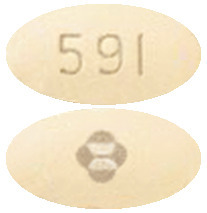
Film coated tablet. Prevymis 240 mg tablet is a yellow oval tablet. Each tablet is debossed with "591" on one side and MSD logo on the other side.
Prevymis 480 mg tablet is a pink oval, bi-convex tablet. Each tablet is debossed with "595" on one side and MSD logo on the other side.
Concentrated injection for infusion. Prevymis 240 mg/12 mL (20 mg/mL) concentrated injection for infusion is supplied as a clear solution and may contain a few small translucent or white particles in a single-dose vial.
Prevymis 480 mg/24 mL (20 mg/mL) concentrated injection for infusion is supplied as a clear solution and may contain a few small translucent or white particles in a single-dose vial.

4 Clinical Particulars

4.9 Overdose

For information on the management of overdose, contact the Poison Information Centre on 131126 (Australia).
There is limited experience with human overdosage with Prevymis. During phase 1 clinical trials, 86 healthy subjects received doses ranging from 720 mg/day to 1440 mg/day of Prevymis for up to 14 days. The adverse reaction profile was similar to that of the clinical dose of 480 mg/day. There is no specific antidote for overdose with Prevymis. In case of overdose, it is recommended that the patient be monitored for adverse reactions and appropriate symptomatic treatment instituted.
It is unknown whether dialysis will result in meaningful removal of Prevymis from systemic circulation.

5 Pharmacological Properties

5.3 Preclinical Safety Data

Genotoxicity. Letermovir was not genotoxic in a battery of in vitro or in vivo assays, including microbial mutagenesis assays, chromosomal aberration in Chinese Hamster Ovary cells, and in an in vivo mouse micronucleus study.
Carcinogenicity. A 6-month oral carcinogenicity study in RasH2 transgenic (Tg.RasH2) mice showed no evidence of human-relevant tumorigenesis up to the highest doses tested, 150 mg/kg/day (2 times the clinical plasma AUC at the maximum recommended human dose) and 300 mg/kg/day (6 times the clinical plasma AUC at the maximum recommended dose) in males and females, respectively.

6 Pharmaceutical Particulars

6.7 Physicochemical Properties

Letermovir has a molecular formula of C29H28F4N4O4 and a molecular weight of 572.55. The chemical name for letermovir is (4S)-2-{8-Fluoro-2-[4-(3- methoxyphenyl)piperazin-1-yl]-3- [2-methoxy-5-(trifluoromethyl)phenyl]- 3,4-dihydroquinazolin-4-yl}acetic acid. Letermovir is very slightly soluble in water.
Chemical structure. The chemical structural formula is:
https://stagingapi.mims.com/au/public/v2/images/fullchemgif/CSLETERM.gif CAS number. The CAS Registry Number is 917389-32-3.
pKA and partition coefficient. Letermovir drug substance (DS) is amorphous powder, with two pKa values at 3.6 and 7.1. The partition coefficient (Log P) at pH 7 is 2.17.

7 Medicine Schedule (Poisons Standard)

Prescription only medicine (S4).

Summary Table of Changes

https://stagingapi.mims.com/au/public/v2/images/fulltablegif/PREVYMST.gif