



What is in this leaflet
This leaflet answers some common questions about rizatriptan.
It does not contain all the available information.
It does not take the place of talking to your doctor or pharmacist.
All medicines have risks and benefits.
Your doctor has weighed the risks of you using this medicine against the benefits they expect it will have for you.
If you have any concerns about taking this medicine, ask your doctor or pharmacist.
Keep this leaflet with the medicine. You may want to read it again.
What this medicine is used for
Rizatriptan is used to relieve the headache pain and other symptoms of migraine attacks.
Rizatriptan does not work for other types of headaches.
Migraine is an intense, throbbing, typically one-sided headache.
It often includes nausea, vomiting, and sensitivity to light or sound.
Some people may have visual symptoms before the headache, called an aura.
An aura can include flashing lights or wavy lines.
Migraine attacks last anywhere from two hours to two days and they can return frequently.
The severity and frequency of migraines may vary.
Migraine occurs in about one out every 10 people.
It is three times more common in women than men.
Six out of ten migraine sufferers have their first attack before the age of 20.
There is no single cause of migraine.
They tend to run in families.
Certain things trigger migraine attacks in some people, including:
- certain foods or drinks e.g. cheese, dairy products, chocolate, citrus fruit, caffeine, alcohol (especially red wine)
- stress, anger, worry
- changes in routine e.g. under or over sleeping, missing meals, change in diet
- bright light or loud noises
- hormonal changes in women e.g. during menstrual periods.
If you understand what triggers your attacks, you may be able to prevent migraine attacks or reduce their frequency.
Keeping a headache diary will help you identify and monitor possible migraine triggers.
Once the triggers are identified, you and your doctor can modify your treatment and lifestyle appropriately.
How it works
During a migraine attack, blood vessels in the brain dilate, or widen, resulting in a throbbing pain.
Rizatriptan decreases this widening and returns the blood vessels to their normal size, helping to relieve the pain.
Rizatriptan also blocks the release of certain chemicals from nerve endings that cause more pain and other symptoms of migraine.
Ask your doctor if you have any questions about why this medicine has been prescribed for you. Your doctor may have prescribed this medicine for another reason.
This medicine is available only with a doctor's prescription.
This medicine is not addictive.
There is not enough information to recommend the use of this medicine for children under the age of 18 years.
Before you take this medicine
When you must not take it
Do not take this medicine if you have an allergy to:
- rizatriptan
- any of the ingredients listed at the end of this leaflet.
Some of the symptoms of an allergic reaction may include:
- shortness of breath
- wheezing or difficulty breathing
- swelling of the face, lips, tongue, throat or other parts of the body
- rash, itching or hives on the skin.
Do not take this medicine if you have or have had any of the following medical conditions:
- uncontrolled high blood pressure
- heart disease, including angina and previous heart attacks
- Prinzmetal's angina
- history of stroke or transient ischemic attack (TIA)
- peripheral vascular disease, such as ischemic bowel disease.
Do not take this medicine if you are also taking monoamine oxidase inhibitors (MAOIs) for depression, or have taken them within the last 2 weeks. MAOIs include moclobemide, phenelzine, tranylcypromine and pargyline.
Do not take this medicine after the expiry date printed on the pack or the packaging is torn or shows signs of tampering. If it has expired or is damaged, return it to your pharmacist for disposal.
If you are not sure whether you should start taking rizatriptan, talk to your doctor.
Before you start to take it
Tell your doctor if you have allergies to any other medicines, foods, preservatives or dyes.
Tell your doctor if you are pregnant or plan to become pregnant.
Like most medicines, rizatriptan is not recommended for use during pregnancy.
If there is need to consider rizatriptan during pregnancy, your doctor will discuss with you the risks and benefits involved.
Tell your doctor if you are breastfeeding. It is not known whether rizatriptan pass into breast milk.
Your doctor will discuss with you the risks and benefits of taking them while breast-feeding.
Tell your doctor if you have any risks factors for heart or blood vessel disease, including:
- high blood pressure
- diabetes
- smoking
- a high cholesterol level
- a family history of heart or blood vessel disease.
Tell your doctor if your headache is more severe than your 'usual' migraine, or it behaves differently.
Taking other medicines
Tell your doctor if you are taking any other medicines, including any that you get from your pharmacy, supermarket or health food shop.
Some medicines should not be taken with rizatriptan. These include:
- MAOIs, used to treat depression, including moclobemide, tranylcypromine, phenelzine, pargyline
- sumatriptan, another similar medicine used to treat migraine.
Some medicines may interact with rizatriptan. These include:
- propranolol, used to treat high blood pressure
- ergotamine and dihydroergotamine, other medicines used to treat migraine
- methysergide, used to prevent migraine
- St. John's wort (Hypericum perforatum), or products containing St. John's wort.
Ask your doctor for instructions about taking rizatriptan if you are also taking selective serotonin reuptake inhibitors (SSRIs) such as sertraline, escitalopram, and fluoxetine, or serotonin norepinephrine reuptake inhibitors (SNRIs) such as venlafaxine and duloxetine.
These medicines may be affected by this medicine or may affect how well it works.
You may need different amounts of your medicines, or you may need to take different medicines.
Your doctor and pharmacist have more information on medicines to be careful with or avoid while taking this medicine.
Other medicines not listed above may also interact with rizatriptan.
How to take this medicine
Follow all directions given to you by your doctor carefully. They may be differ to the information contained in this leaflet.
If you do not understand the instructions on the box, ask your doctor for help.
How much to take
Your doctor will tell you how much of this medicine you should take.
This will depend on your condition and whether you are taking any other medicines.
The usual dose to treat a migraine is one 10 mg tablet taken as needed.
If the first rizatriptan tablet does help your migraine, but it comes back later, you may take another tablet.
Take the second tablet at least 2 hours after the first tablet.
Do not take more than 30 mg (three 10 mg tablets) in a 24-hour period.
If the first tablet does not help your migraine, do not take another tablet for the same attack as it is unlikely to help.
It is still likely that you will respond to rizatriptan during your next attack.
How to take it
With dry hands, place one tablet on your tongue.
When to take it
It does not matter if you take it with or without food.
If you take too much (overdose)
Immediately telephone your doctor or the Poisons Information Centre (telephone 13 11 26) for advice, or go to Accident and Emergency at your nearest hospital, if you think that you or anyone else may have taken too much of this medicine.
Do this even if there are no signs of discomfort or poisoning. You may need urgent medical attention.
If you take too many tablets, you may feel sleepy, dizzy, faint or have a slow heartbeat.
While you are taking this medicine
Things you must do
If your headache is more severe than your 'usual' migraine or behaves differently, tell your doctor immediately.
If you are about to be started on any new medicine, remind your doctor and pharmacist that you are taking this medicine.
Tell any other doctors, dentists and pharmacists who are treating you that you take this medicine.
If you become pregnant while taking this medicine, tell your doctor immediately.
Keep all of your doctor's appointments so that your progress can be checked.
Your doctor may do some from time to time to make sure the medicine is working and to prevent unwanted side effects.
Things you must not do
Do not give this medicine to anyone else, even if they have the same condition as you.
Do not take your medicine to treat any other complaints unless your doctor tells you to.
Do not change the dosage without first checking with your doctor.
Things to be careful of
Be careful when driving or operating machinery until you know how this medicine affects you.
Migraine or treatment with rizatriptan may cause sleepiness or dizziness in some people.
Make sure you know how you react to rizatriptan before you drive a car, operate machinery, or do anything else that could be dangerous if you are sleepy or dizzy.
If you drink alcohol, sleepiness or dizziness may be worse.
Side effects
Tell your doctor or pharmacist as soon as possible if you do not feel well while you are taking rizatriptan.
Rizatriptan helps most people with migraines, but it may have unwanted side effects in a few people.
All medicines can have side effects.
Sometimes they are serious, most of the time they are not.
You may need medical treatment if you get some of the side effects.
Do not be alarmed by the following lists of side effects.
You may not experience any of them.
Ask your doctor or pharmacist to answer any questions you may have.
Tell your doctor or pharmacist if you notice any of the following:
- difficulty thinking or working, decreased mental sharpness
- sleepiness, tiredness, inability to sleep
- dizziness, tremor, unsteadiness when walking
- nervousness, agitation
- headache not relieved by rizatriptan
- stomach or bowel problems, such as feeling sick (nausea), vomiting, stomach upset or pain, diarrhoea
- changes in your sight or taste, such as blurred vision, dry mouth, thirst, bad taste, throat discomfort, tongue swelling
- skin problems, such as skin rash, itching, redness or flushing of the face, hot flushes, sweating
- changes in the way your body feels, such as feelings of heaviness or tightness on parts of the body
- muscle weakness or pain
- neck pain or facial pain.
The above list includes the more common side effects of your medicine. They are usually mild.
Abnormalities of the electrocardiogram (a test that records the electrical activity of your heart) have also been reported.
If you take rizatriptan too often, you may get chronic headaches.
Contact your doctor as you may have to stop taking rizatriptan.
Tell your doctor as soon as possible if you notice any of the following:
- tingling or numbness of the hands or feet
- fast, slow or irregular heartbeats, palpitations
- spinning sensation, also called vertigo
- seeing/feeling/hearing things that are not there.
The above list includes serious side effects that may require medical attention.
If any of the following happen, stop taking your medicine and contact your doctor immediately or go to Accident and Emergency at your nearest hospital:
- fainting, coma
- pinkish, itchy swellings on the skin, also called hives
- very high temperature, unusually increased reflexes or lack of coordination
- pain or tightness in chest (symptoms of heart attack or angina)
- collapse, numbness or weakness of the arms or legs, headache, dizziness and confusion, visual disturbance, difficulty swallowing, slurred speech and loss of speech (symptoms of stroke)
- severe skin reaction which starts with painful red areas, then large blisters and ends with peeling of layers of skin
- This is accompanied by fever and chills, aching muscles and generally feeling unwell
- seizures, fits or convulsions
- persistent purple discolouration, and/or pain in the fingers, toes, ears, nose or jaw
- pain or spasms in the lower stomach, bloody diarrhoea and fever
- swelling of the face, lips, mouth, tongue or throat which may cause difficulty in swallowing or breathing; shortness of breath, wheezing or difficulty breathing; rash, itching or hives on the skin (symptoms of an allergic reaction).
The above list includes serious side effects and you may need urgent medical attention or hospitalisation.
Serious side effects are rare.
As with other medicines in the same class as rizatriptan, heart attack, angina and stroke have been reported very rarely, and generally occurred people with risk factors for heart or blood vessel disease (including high blood pressure, diabetes, smoking, family history of heart or blood vessel disease e.g. stroke).
Tell your doctor or pharmacist if you notice anything that is making you feel unwell.
Other side effects not listed above may also occur in some patients.
Storage and disposal
Storage
Keep your medicine in the pack until it is time to take it. If you take your medicine out of the pack it may not keep well.
Keep your medicine in a cool dry place where the temperature stays below 30°C.
Do not store your medicine or any other medicine in the bathroom or near a sink.
Do not leave it on a window sill or in the car. Heat and dampness can destroy some medicines.
Keep this medicine where children cannot reach it. A locked cupboard at least one-and-a-half metres above the ground is a good place to store medicines.
Disposal
If your doctor tells you to stop taking this medicine or the expiry date has passed, ask your pharmacist what to do with any medicine that is left over.
Product description
What it looks like
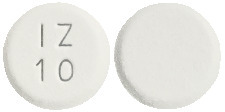
10mg: White, round, flat, bevel-edged tablet embossed with "IZ 10" on one side and plain on the other side.
Blister pack of 2 tablets.
AUST R 220030.
Ingredients
Each tablet contains rizatriptan benzoate (equivalent to 10 mg of rizatriptan).
It also contains the following:
- mannitol
- calcium silicate
- microcrystalline cellulose
- crospovidone
- aspartame
- magnesium stearate
- colloidal anhydrous silica
- Silarom Tropical Flavour 1219410193.
This medicine does not contain gluten, lactose, sucrose, tartrazine and other azo dyes. This medicine contains aspartame.
Sponsor
Apotex Pty Ltd
16 Giffnock Avenue
Macquarie Park NSW 2113
APOTEX is a registered trademark of Apotex Inc.
This leaflet was prepared in November 2021.
Published by MIMS January 2022