

Consumer medicine information

Roaccutane 20 mg Capsules

Isotretinoin

BRAND INFORMATION

Brand name

Roaccutane

Active ingredient

Isotretinoin

Schedule

S4


Consumer medicine information (CMI) leaflet

Please read this leaflet carefully before you start using Roaccutane 20 mg Capsules.

1. Why am I using Roaccutane?


Roaccutane contains the active ingredient isotretinoin. Roaccutane is used to treat acne. For more information, see Section 1. Why am I using Roaccutane? in the full CMI.

2. What should I know before I use Roaccutane?


Do not use if you have ever had an allergic reaction to Roaccutane or any of the ingredients listed at the end of the CMI.
Talk to your doctor if you have any other medical conditions, take any other medicines, or are pregnant or plan to become pregnant or are breastfeeding. For more information, see Section 2. What should I know before I use Roaccutane? in the full CMI.

3. What if I am taking other medicines?


Some medicines may interfere with Roaccutane and affect how it works. A list of these medicines is in Section 3. What if I am taking other medicines? in the full CMI.

4. How do I use Roaccutane?

  • Your doctor will tell you how many Roaccutane capsules to take each day, take them exactly as your doctor has prescribed.
  • Roaccutane capsules should be swallowed whole with a glass of water or milk and must always be taken with food.

More instructions can be found in Section 4. How do I use Roaccutane? in the full CMI.

5. What should I know while using Roaccutane?

Things you should do
  • Remind any doctor, dentist or pharmacist you visit that you are using Roaccutane.
  • Use effective contraception for one month before, during and one month after treatment.
  • If you become pregnant while taking Roaccutane, stop taking it and tell your doctor immediately.
  • Tell your doctor if you are intending to do a lot of heavy lifting or exercise.
  • Your skin may be more sensitive while on Roaccutane. Avoid excessive sun exposure and certain skin and hair treatments.
Things you should not do
  • Do not stop taking Roaccutane suddenly, change the dose or let yourself run out of medicine over the weekend or on holidays.
  • Do not give Roaccutane to anyone else even if their symptoms seem similar to yours.
  • Do not use Roaccutane to treat other complaints unless your doctor says to.
  • Do not donate blood during treatment with Roaccutane or for at least 1 month after stopping treatment.
Driving or using machines
  • Be careful driving or operating machinery until you know how Roaccutane affects you.
Drinking alcohol
  • You must tell your doctor if you drink large amounts of alcohol.
Looking after your medicine
  • Keep the blister pack in a cool dry place where the temperature stays below 25°C.
  • Protect Roaccutane from light.

For more information, see Section 5. What should I know while using Roaccutane? in the full CMI.

6. Are there any side effects?


Roaccutane helps most people with acne but it may have unwanted side effects in a few people. Sometimes they are serious, most of the time they are not. You may need medical treatment if you get some of the side effects. When you are using Roaccutane, you can have some serious side effects. Serious side effects may include nausea, vomiting, persistent headache, blurred vision or visual disturbances, changes in your hearing or ringing in your ears, severe upper stomach pain, unexpected muscle pain, tenderness or weakness, blood in stools or severe diarrhoea, severe bruising, sudden red or itchy spots, painful red areas, fever and chills, aching muscles, feeling depressed with or without suicidal thoughts and thinking, seeing or hearing things that are not real.
For more information, including what to do if you have any side effects, see Section 6. Are there any side effects? in the full CMI.

BRAND INFORMATION

Brand name

Roaccutane

Active ingredient

Isotretinoin

Schedule

S4


1 Name of Medicine

Isotretinoin.

2 Qualitative and Quantitative Composition

Each Roaccutane 20 mg capsule contains isotretinoin 20 mg.
Excipients with known effect. Contains soya bean oil (refined, hydrogenated and partially hydrogenated).
For the full list of excipients, see Section 6.1 List of Excipients.

3 Pharmaceutical Form

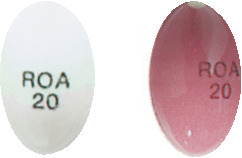
Roaccutane 20 mg. Half brown-red soft capsule half opaque white, imprinted with ROA 20.

4 Clinical Particulars

4.9 Overdose

Signs of hypervitaminosis A could appear in cases of overdose. Clinically, overdose has been associated with transient headache, vomiting, facial flushing, cheilosis, abdominal pain, headache, dizziness and ataxia. All symptoms quickly resolved without apparent residual effects.
Treatment of overdose should consist of general supportive measures.
For information on the management of overdose, contact the Poisons Information Centre on 13 11 26 (Australia).

5 Pharmacological Properties

5.3 Preclinical Safety Data

Carcinogenicity. In Fischer 344 rats given isotretinoin at dosages of 32 or 8 mg/kg/day for greater than 18 months, there was dose-related increased incidence of pheochromocytoma. The incidence of adrenal medullary hyperplasia was also increased at the higher dosage. There is doubt as to the validity of this animal model as a predictor of tumorigenicity in man, as the Fischer rat is genetically predisposed to the Multiple Endocrine Neoplasia Syndrome which includes spontaneous occurrence of pheochromocytoma. In these studies there was also a dose-related decrease in the incidence of liver adenomata, liver angiomata and leukemia.
Genotoxicity. Isotretinoin was negative in tests for gene mutation (histidine reversion in S. typhimurium), chromosomal damage in vitro (Chinese hamster lung cell and S. cerevisiae D7 assays) and in vivo (Mouse micronucleus test), and unscheduled DNA synthesis in vitro (rat hepatocytes).

6 Pharmaceutical Particulars

6.7 Physicochemical Properties

Chemical structure.
https://stagingapi.mims.com/au/public/v2/images/fullchemgif/CSISOTRE.gif CAS number. 4759-48-2.
Chemically, isotretinoin is (2Z, 4E, 6E, 8E)-3,7-dimethyl-9-(2,6,6 trimethylcyclohex 1 enyl)nona-2,4,6,8-tetraenoic acid and is also known as 13 cis retinoic acid. Isotretinoin is related to both retinoic acid and retinol (vitamin A). The molecular formula is C20H28O2. Isotretinoin has a molecular weight of 300.44.
Isotretinoin is a yellow orange to orange crystalline powder, practically insoluble in water, soluble in methylene chloride, sparingly soluble in ether and slightly soluble in alcohol. It is sensitive to air, heat and light, especially in solution.

7 Medicine Schedule (Poisons Standard)

Schedule 4 - Prescription only medicine.

Summary Table of Changes

https://stagingapi.mims.com/au/public/v2/images/fulltablegif/ROACCUST.gif