

Consumer medicine information

Tivicay 10 mg Tablets

Dolutegravir

BRAND INFORMATION

Brand name

Tivicay

Active ingredient

Dolutegravir

Schedule

S4


Consumer medicine information (CMI) leaflet

Please read this leaflet carefully before you start using Tivicay 10 mg Tablets.

1. Why am I using TIVICAY?


TIVICAY contains the active ingredient dolutegravir. TIVICAY is used to treat HIV (human immunodeficiency virus) infection in adults and in children. For more information, see Section 1. Why am I using TIVICAY? in the full CMI.

2. What should I know before I use TIVICAY?


Do not use if you (or your child, if they are the patient) have ever had an allergic reaction to dolutegravir or any of the ingredients listed at the end of the CMI. Do not use if taking another medicine called dofetilide (to treat heart conditions).
Talk to your doctor if you have any other medical conditions, take any other medicines, or are pregnant or plan to become pregnant or are breastfeeding.
For more information, see Section 2. What should I know before I use TIVICAY? in the full CMI.

3. What if I am taking other medicines?


Some medicines may interfere with TIVICAY and affect how it works.
A list of these medicines is in Section 3. What if I am taking other medicines? in the full CMI.

4. How do I use TIVICAY?

  • For children, your doctor will decide on the correct dose of TIVICAY for your child, depending on their weight and age.
  • For adults, the usual dose of TIVICAY film coated tablets is 50 mg, once a day.
  • For HIV infection that is resistant to other medicines similar to TIVICAY, the usual dose of TIVICAY film coated tablets is 50 mg taken twice a day.
  • Film-coated tablets and dispersible tablets are not interchangeable.

More instructions can be found in Section 4. How do I use TIVICAY? in the full CMI.

5. What should I know while using TIVICAY?

Things you should do
  • Remind any doctor, dentist or pharmacist you visit that you are using TIVICAY.
  • If you become pregnant while taking this medicine, tell your doctor immediately.
  • Keep all of your doctor's appointments so that your progress can be checked.
Things you should not do
  • Do not give your medicine to anyone else, even if they have the same condition.
  • Do not stop taking your medicine or lower the dosage without checking with your doctor.
Driving or using machines
  • TIVICAY can make you dizzy and have other side effects that make you less alert.
  • Don't drive or use machines if you are affected.
Looking after your medicine
  • Keep your tablets in a cool dry place where the temperature stays below 30°C.
  • Store in the original package in order to protect from moisture. Keep the bottle tightly closed. Do not remove the desiccant.
  • 10 mg film coated tablets only - Store in the original package in order to protect from moisture. Keep the bottle tightly closed. Do not remove the desiccant.

For more information, see Section 5. What should I know while using TIVICAY? in the full CMI.

6. Are there any side effects?


The most common side effects are headache, diarrhoea and feeling sick (nausea).
See a doctor as soon as possible if you develop a rash or if you notice anything that is making you feel unwell.
For more information, including what to do if you have any side effects, see Section 6. Are there any side effects? in the full CMI.

BRAND INFORMATION

Brand name

Tivicay

Active ingredient

Dolutegravir

Schedule

S4


1 Name of Medicine

Dolutegravir.

2 Qualitative and Quantitative Composition

Dolutegravir sodium is a white to light yellow powder.
Film-coated tablets. Each tablet contains 10 mg, 25 mg or 50 mg of dolutegravir (as dolutegravir sodium).
Tivicay film-coated tablets each contain 10.5 mg, 26.3 mg or 52.6 mg of dolutegravir sodium, equivalent to 10 mg, 25 mg or 50 mg of dolutegravir free acid.
Dispersible tablets. Each tablet contains 5 mg of dolutegravir (as dolutegravir sodium).
Tivicay PD dispersible tablets each contain 5.26 mg of dolutegravir sodium, equivalent to 5 mg of dolutegravir free acid.
Tivicay and Tivicay PD tablets also contain mannitol.
Tivicay PD dispersible tablets contain sucralose.
For the full list of excipients, see Section 6.1 List of Excipients.

3 Pharmaceutical Form

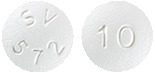
Film-coated tablets. 10 mg. White, film-coated, round, biconvex tablets debossed with 'SV 572' on one side and '10' on the other side.
25 mg. Pale yellow, film-coated, round, biconvex tablets debossed with 'SV 572' on one side and '25' on the other side.
50 mg. Yellow, film-coated, round, biconvex tablets, debossed with 'SV 572' on one side and '50' on the other side.
Dispersible tablets. 5 mg. White, round, biconvex tablets debossed with 'SV H7S' on one side and '5' on the other side.

4 Clinical Particulars

4.9 Overdose

Symptoms and signs. There is currently limited experience with overdosage in Tivicay and Tivicay PD.
Limited experience of single higher doses (up to 250 mg film-coated tablets in healthy patients) revealed no specific symptoms or signs, apart from those listed as adverse reactions.
Treatment. Further management should be as clinically indicated or as recommended by the national poisons centre, where available.
There is no specific treatment for an overdose of Tivicay/Tivicay PD. If overdose occurs, the patient should be treated supportively with appropriate monitoring as necessary. As dolutegravir is highly bound to plasma proteins, it is unlikely that it will be significantly removed by dialysis.
For information on the management of overdose, contact the Poisons Information Centre on 131126 (Australia).

5 Pharmacological Properties

5.3 Preclinical Safety Data

Genotoxicity. Dolutegravir was not mutagenic or clastogenic using in vitro tests in bacteria and cultured mammalian cells, and an in vivo rodent micronucleus assay.
Carcinogenicity. In long-term oral carcinogenicity studies conducted with dolutegravir no drug related increases in tumour incidence were found in mice at doses up to 500 mg/kg/day (14 times the human systemic exposure based on AUC at the maximum recommended dose of 50 mg BID) or in rats at doses up to 50 mg/kg/day (12 times the human systemic exposure based on AUC at the maximum recommended dose).

6 Pharmaceutical Particulars

6.7 Physicochemical Properties

The chemical (IUPAC) name for dolutegravir sodium is Sodium (4R,12aS)-9- {[(2,4- difluorophenyl) methyl]carbamoyl}- 4-methyl-6,8 -dioxo-3,4,6,8,12,12a -hexahydro-2H- pyrido[1',2':4,5] pyrazino[2,1-b][1,3] oxazin-7-olate.
Molecular formula: C20H18F2N3NaO5.
Molecular weight of 441.36 g/mol.
The partition coefficient (log P) for dolutegravir sodium is 2.2 and the pKa is 8.2.
Dolutegravir sodium is slightly soluble in water.
Chemical structure.
https://stagingapi.mims.com/au/public/v2/images/fullchemgif/CSDOLUTE.gif CAS number. 1051375-19-9.

7 Medicine Schedule (Poisons Standard)

Schedule 4 - Prescription Only Medicine.

Summary Table of Changes

https://stagingapi.mims.com/au/public/v2/images/fulltablegif/TIVICAST.gif