



What is in this leaflet?
Please read this leaflet carefully before you use Zofran Tablets.
This leaflet answers some common questions about Zofran Tablets. It does not contain all of the available information.
It does not take the place of talking to your doctor or pharmacist.
All medicines have risks and benefits. Your doctor has weighed the expected benefits of you taking Zofran Tablets against the risks this medicine could have for you.
If you have any concerns about taking this medicine, ask your doctor or pharmacist.
Keep this leaflet with the medicine. You may need to read it again.
What is Zofran Tablets used for?
Zofran Tablets contain a medicine called ondansetron. This belongs to a group of medicines called serotonin receptor-3 antagonists.
Zofran Tablets are used to help stop the nausea (sick feeling) and vomiting which can occur after medical treatments and operations.
Zofran Tablets should only be used to treat the nausea and vomiting for which they have been prescribed.
Your doctor may have prescribed Zofran Tablets for another reason. If you want more information, ask your doctor.
Zofran Tablets are not addictive.
Before you take Zofran Tablets
Do not take if:
You must not take Zofran Tablets if:
- you are taking apomorphine (used to treat Parkinson's disease).
- you have ever had an allergic reaction to ondansetron or any of the ingredients listed toward the end of this leaflet. (See "Ingredients")
- you are pregnant, trying to become pregnant or breastfeeding, unless your doctor says it is safe.
- the expiry date (EXP) printed on the pack has passed.
- the packaging is torn or shows signs of tampering.
Tell your doctor if:
You must tell your doctor if:
- you are allergic to foods, dyes, preservatives or any other medicines.
- you have had to stop taking another medicine for your nausea or vomiting.
- you are taking any other medicines, including medicines you buy without a prescription.
- you have or used to have liver problems.
- you are breastfeeding, pregnant or trying to become pregnant.
Some medicines may affect the way others work. Your doctor or pharmacist will be able to tell you what to do when taking Zofran tablets with other medicines.
How do I take Zofran Tablets?
How much to take
Take Zofran Tablets as directed by your doctor or pharmacist.
Do NOT take MORE TABLETS than your doctor or pharmacist tells you.
Do NOT take the tablets MORE OFTEN than your doctor or pharmacist tells you.
If you vomit within one hour taking your first Zofran Tablet of each course prescribed to you, you should take the same dose again. If you continue to vomit, tell your doctor.
How to take them
Swallow each tablet with a drink of water. Do not crush the tablet. If you have trouble swallowing your tablet, please tell your doctor.
How long to take them for
Do not stop taking Zofran Tablets, or change the dose without first checking with your doctor.
If you forget to take them
If you miss your dose and you do not feel sick, take your next dose when you are meant to.
If you miss your dose and you feel sick, take the missed dose as soon as possible, then go back to taking your Zofran Tablets as you would normally. If it is almost time for your next dose, skip the dose you missed and take your next dose when you are meant to.
What do I do if I take too much? (Overdose)
Immediately telephone your doctor or Poisons Information Centre (telephone 13 11 26) for advice, if you think you or anyone else may have taken too much Zofran Tablets, even if there are no signs of discomfort or poisoning. If you are not sure what to do, contact your doctor or pharmacist.
While you are taking Zofran Tablets
Things you must do
Tell your doctor if, for any reason, you have not taken your medicine exactly as directed. Otherwise, your doctor may think that it was not working as it should and change your treatment unnecessarily.
Things you must not do
Do not give this medicine to anyone else, even if their symptoms seem similar to yours.
Do not use Zofran Tablets to treat any other complaints unless your doctor says to.
What are the side effects?
Check with your doctor as soon as possible if you think you are experiencing any side effects or allergic reactions due to taking Zofran Tablets, even if the problem is not listed below. Like other medicines, Zofran Tablets can cause some side effects. If they occur, they are most likely to be minor and temporary. However, some may be serious and need medical attention.
The most commonly reported side effects are:
- headache
- a sensation of warmth or flushing
- mild stomach cramps
- constipation or diarrhoea
- dry mouth
- hiccups.
These are all mild side effects. There is no immediate reason to stop taking your tablets unless you are concerned.
Tell your doctor immediately if you notice any of the following:
- 'wheezy' symptoms
- chest pain or tightness of the chest
- changes in the way your heart beats, e.g. if you notice it beating faster or slower than normal, or if it beats irregularly or if it 'throbs'
- disturbance in heart rhythm (sometimes causing a sudden loss of consciousness)
- patients may experience "serotonin syndrome" (confusion, sweating, unsteadiness, shaking, diarrhoea) when Zofran is taken in combination with other serotonergic drugs. Serotonergic drugs can include certain types of antidepressants, opioid pain medicines such as tramadol and fentanyl, and lithium. Please note, this is not an exhaustive list. Please discuss with your pharmacist or doctor if you have any concerns
- severe skin reaction where the top layer of the skin detaches from the lower layers
- low blood pressure
- fits or convulsions
- swelling of the eyelids, face, lips, mouth or throat which may cause difficulty in swallowing or breathing
- skin rash, skin lumps or hives.
These are all serious side effects. You may need urgent medical attention. Serious side effects are rare.
This is not a complete list of all possible side effects. Others may occur in some people and there may be some side effects not yet known.
Do not be alarmed by this list of possible side effects. You may not experience any of them.
If your nausea (feeling of sickness) or vomiting does not go away, ask your doctor what to do.
In certain illnesses and treatments where Zofran has been used, blood vessel blockage has occurred. However, it is important to note that blood vessel blockage has also occurred in these illnesses and treatments when Zofran Tablets have NOT been used. Discuss this with your doctor if you have any concerns.
If you feel unwell or have any symptoms that you do not understand, you should tell your doctor immediately.
How do I store Zofran Tablets?
Keep this medicine where children cannot reach it, such as in a locked cupboard.
Keep Zofran Tablets in a cool, dry place where it stays below 30°C, and away from bright sunlight.
Do not leave in a car, on window sill or in bathroom.
Keep Zofran Tablets in their blister pack until time to take.
Return any unused or expired medicine to your pharmacist.
Product description
What Zofran Tablets look like
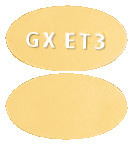
- Your Zofran 4 mg Tablets come as yellow, oval, film coated tablets with 'GXET3' engraved on one face and plain on the other.
- Your Zofran 8 mg Tablets come as yellow, oval, film coated tablets with 'GXET5' engraved on one face and plain on the other.
Your Zofran 4 mg Tablets come in a box containing 4 or 10 tablets packed in foil blisters.
Your Zofran 8 mg Tablets come in a box containing 4 or 10 tablets packed in foil blisters.
Do NOT use your tablets if they have changed colour.
Ingredients
Each Zofran Tablet contains either 4 or 8 milligrams of the active ingredient ondansetron. Your doctor will decide which strength you need.
Zofran Tablets also contain the following inactive ingredients which help to form the tablets: hypromellose (464), lactose, cellulose (460), starch, magnesium stearate (572), and Onaspray yellow (contains 171).
Your tablets also contain small amounts of citric acid, sodium citrate and sodium chloride.
Manufacturer
Your Zofran Tablets are supplied by:
Aspen Pharmacare Australia Pty Ltd
34-36 Chandos Street
St Leonards NSW 2065
Australia
Where to go for further information
Pharmaceutical companies are not in a position to give people an individual diagnosis or medical advice. Your doctor or pharmacist is the best person to give you advice on the treatment of your condition.
This leaflet was updated in October 2014.
The information provided applies only to: Zofran Tablets.
Zofran® is a registered trademark of Aspen Global Incorporated.
Zofran Tablets 4 mg: AUST R 9979
Zofran Tablets 8 mg: AUST R 9981
This leaflet is subject to copyright.
Published by MIMS April 2015